News:
May 4, 2026
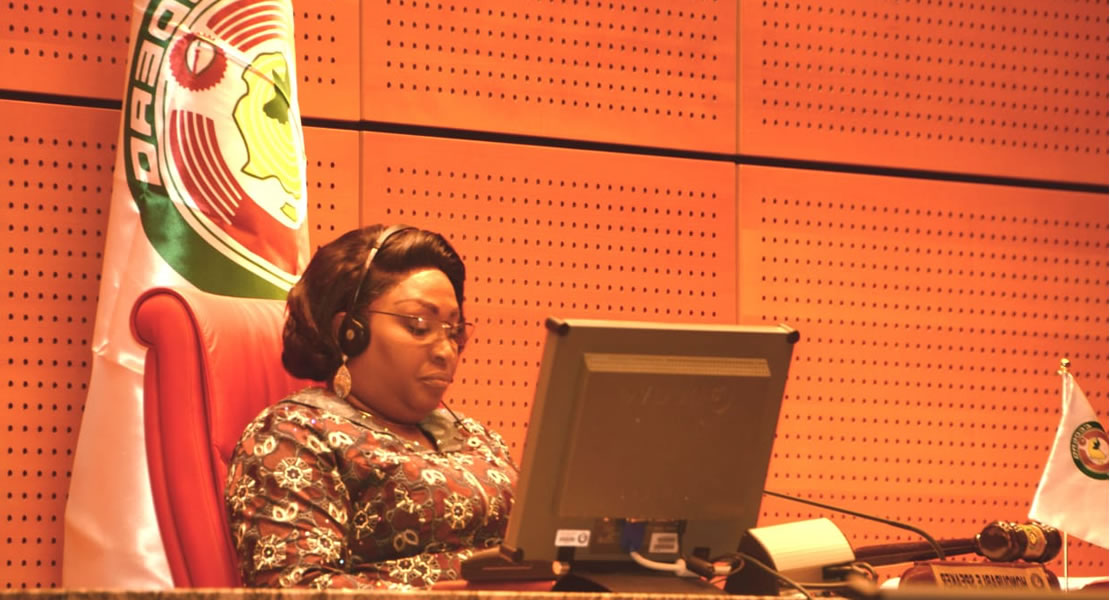
ABUJA – The Speaker of the ECOWAS Parliament, Rt. Hon. Memounatou Ibrahima, has warned that peace across West Africa cannot be taken for granted, urging regional leaders to confront rising insecurity, democratic fragility, and economic strain with urgency and unity.
Speaking at the opening of the First Ordinary Session of the ECOWAS Parliament for 2026 in Abuja on Monday, Ibrahima said the region must remain steadfast in defending democratic values while responding to growing internal and external pressures.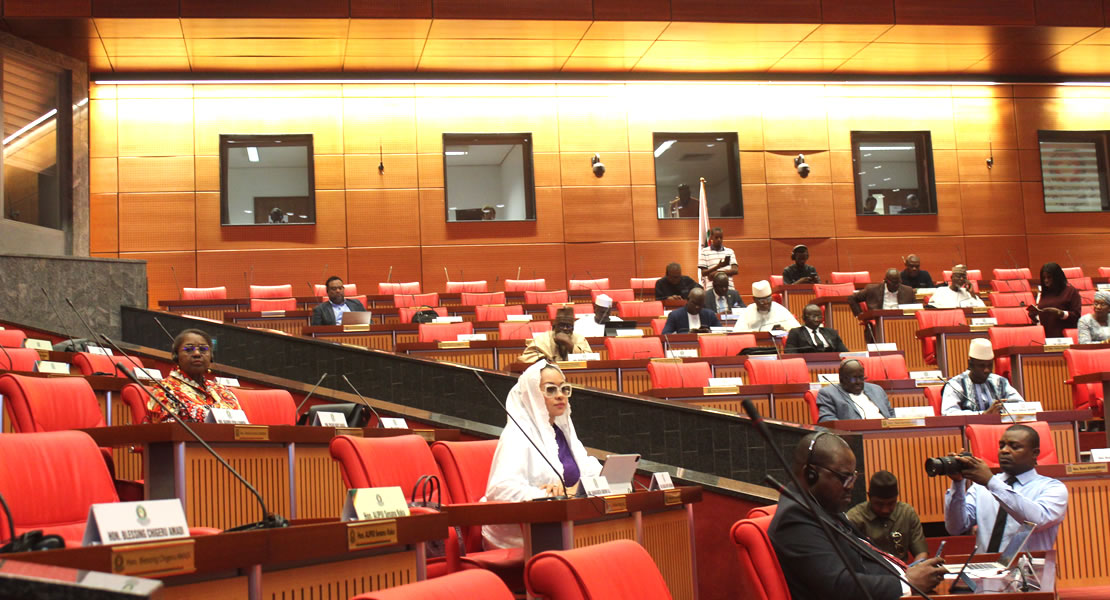
‘Democracy remains our unshakeable foundation’
Ibrahima reaffirmed democracy as the bedrock of the regional bloc, even as she acknowledged emerging threats.
“Developments within our region reaffirm the view that democracy remains the unshakeable foundation of our Community,” she said.
At the same time, she urged caution and responsibility – particularly in politically fragile states.
“Beyond this conviction, honourable colleagues, we must remain vigilant. In this regard, I call on the authorities of Guinea-Bissau to demonstrate responsibility by restoring constitutional order in that sister country,” she added.
Condemnation of recent violence
The Speaker also condemned recent violence in the region, expressing solidarity with affected nations.
“The Parliament places high value on stability and peace within our West African sub-region. Accordingly, it condemns the terrorist attacks carried out on 25 April 2026 in several localities in the Republic of Mali and expresses its solidarity with the Malian people,” Ibrahima said.
Global tensions worsening local hardship
She painted a broader picture of a world in turmoil, warning that global conflicts are compounding economic hardship across West Africa.
“We are meeting at a time when the international environment is marked by tensions and violent conflicts in the Middle East, in Europe, and on our own continent.
“These crises, with their troubling energy implications, are also driving inflationary pressures, particularly on foodstuffs and agricultural inputs, thereby seriously affecting our already fragile economies,” she said.
She further highlighted the region’s exposure to terrorism, piracy, cross-border crime, and climate change, describing them as persistent threats requiring coordinated action.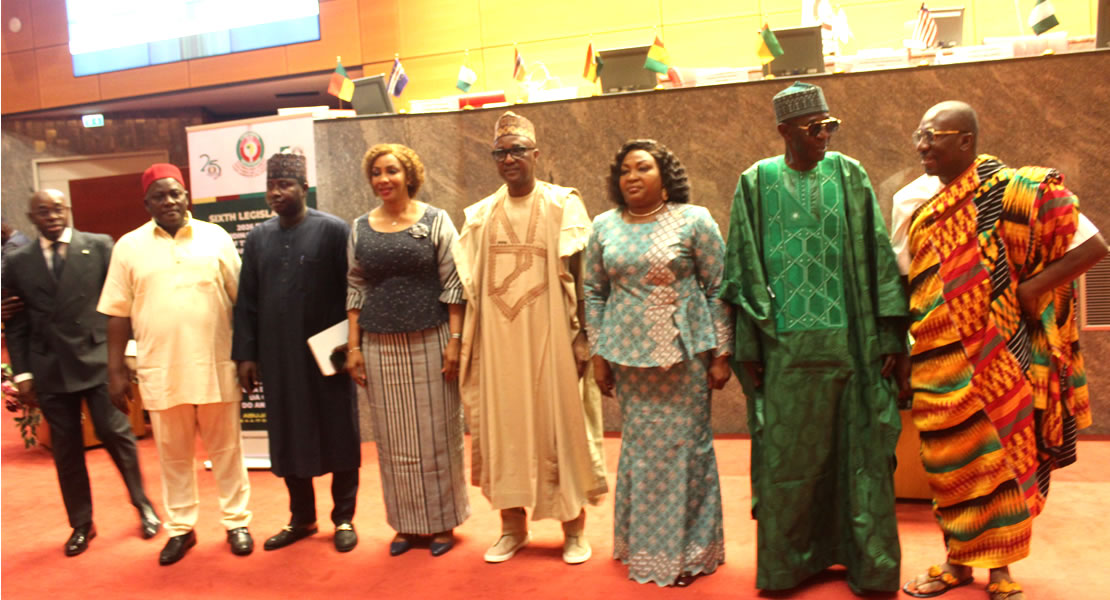
‘Peace cannot be decreed’
Against this backdrop, Ibrahima stressed that lasting peace demands deliberate effort and cooperation.
“Faced with the multiplication of flashpoints, no region is immune. The message must be clear: peace cannot be decreed – it must be patiently built through dialogue, cooperation and mutual respect. The ECOWAS Parliament must echo this imperative to our member states and partners,” she said.
Looking ahead to Lomé summit
Looking ahead, she pointed to the upcoming ECOWAS Future Summit in Lomé as a critical opportunity to reshape the bloc’s direction. She emphasised the Parliament’s central role in that process, describing it as a key platform for democratic legitimacy and accountability.
“This summit aims to accelerate the implementation of Vision 2050 in light of current challenges. It will provide an opportunity to reposition our Community by defining how regional integration – at the heart of our ambition – can be achieved, strengthened and adapted to new realities.
“We must contribute meaningfully to this broader reflection on the future of our regional integration process. Our session must therefore produce bold resolutions and informed opinions commensurate with the challenges before us,” Ibrahima said.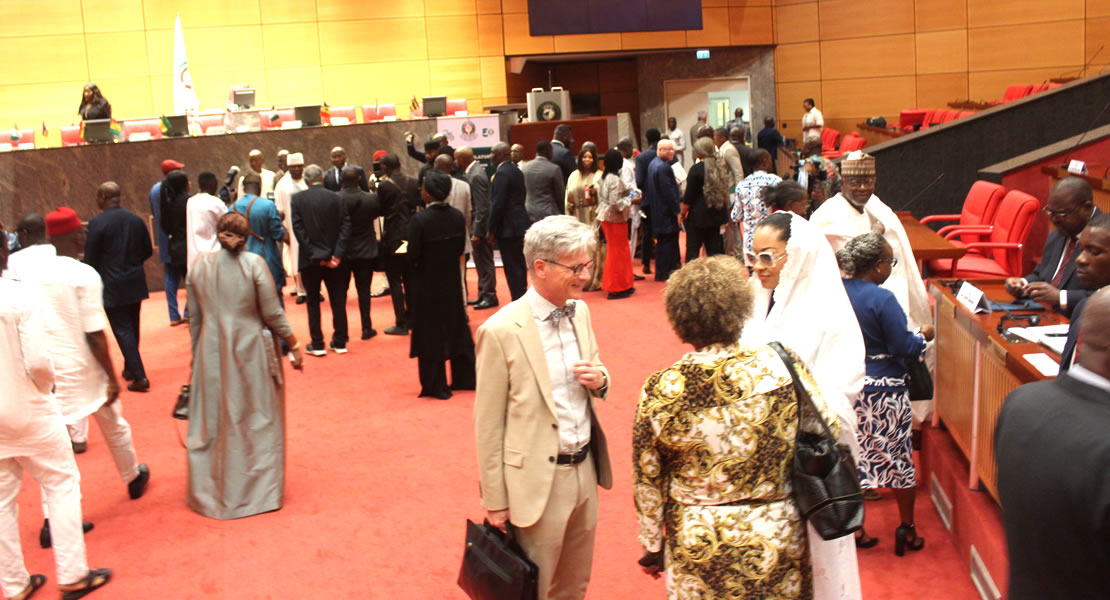
Priority areas for the session
Highlighting recent parliamentary activities, Ibrahima said engagements across the region had focused on employment, social protection, and fiscal oversight – including discussions on digital skills, the plight of street children, and budget implementation.
She outlined key priorities for the session: reviewing community legislation, assessing implementation of regional programmes, and engaging with civil society and development partners.
Upcoming discussions will also cover artificial intelligence, tax policy harmonisation, and women’s economic empowerment – particularly in trade and export opportunities.
“The task before us is immense, but our determination is unwavering,” she said.
“Let us make this session a decisive turning point in our efforts to strengthen our democracies and fulfil the promise of effective, visible regional integration for our peoples.”
Declaring the session open, Ibrahima called for unity and bold action.
Kwaku Sakyi-Danso/Ghanamps.com