News:
March 10, 2026
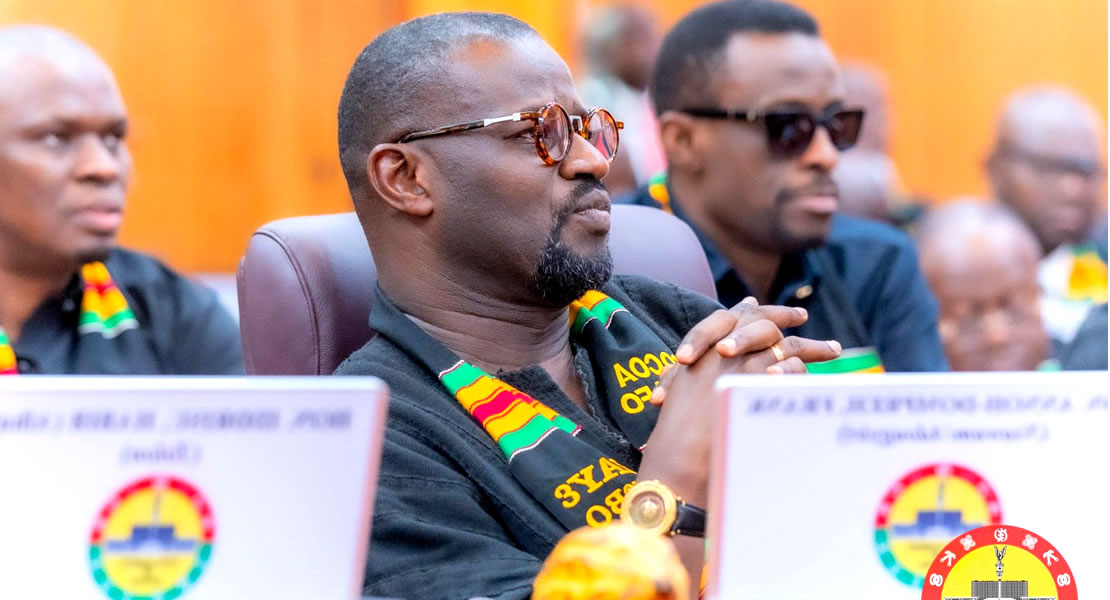
A push to make environmental destruction a criminal offence in Ghana has gained ground in Parliament, with Minority Chief Whip Frank Annoh-Dompreh leading calls for a standalone law to combat ecocide.
The MP for Nsawam-Adoagyiri is urging the House to go beyond regulatory sanctions and fines, arguing that the mass destruction of ecosystems—through illegal mining, deforestation, and industrial pollution—should attract criminal liability.
Delivering a statement in Parliament on Monday, Annoh-Dompreh warned that Ghana’s future is under threat if the current legal framework continues to treat environmental devastation as a simple regulatory breach.
What is Ecocide?
According to the MP, ecocide refers to unlawful or reckless acts committed with the knowledge that they are likely to cause severe, widespread, or long-term damage to the environment.
“This is not abstract rhetoric; it is a legal concept with measurable criteria: damage that is severe, widespread, or long-term,” he told the House.
“It goes far beyond regulatory fines or administrative sanctions. It is about criminal accountability for decisions and actions that destroy the very foundation of life and livelihood.”
He noted that while international law under the Rome Statute recognises crimes like genocide and war crimes, ecocide remains a gap in the legal system, creating what he described as a “legal vacuum” where severe ecological damage often goes unpunished.
A Growing Global Movement
Annoh-Dompreh pointed to international precedents, citing environmental disasters such as the oil pollution in Nigeria’s Niger Delta as examples of destruction that could qualify as ecocide.
He revealed that several countries have already integrated ecocide into their domestic laws, including France, Belgium, Chile, Ecuador, and Ukraine. He noted that Belgium recently became the first European Union country to explicitly criminalise ecocide in its penal code.
“Recognising ecocide as a crime embeds a moral framework into our legal system. Criminalisation signals that destroying ecosystems is morally and legally unacceptable,” he stated.
The Local Emergency: Galamsey and Water Pollution
The MP stressed that Ghana cannot afford to lag behind, warning that the country’s ecosystems are under severe pressure, particularly from illegal mining—commonly known as galamsey.
Citing reports, Annoh-Dompreh noted that up to 60 percent of Ghana’s water bodies have been polluted by mining operations.
“Environmental stability is foundational to food security, human health, and sustained economic development. The consequences of ecological damage are intergenerational,” he said.
Recommendations and Next Steps
Annoh-Dompreh proposed a three-pronged approach for Ghana:
1. Standalone Legislation: Introduce a specific ecocide law with clearly defined thresholds for environmental damage.
2. International Advocacy: Champion the recognition of ecocide as the fifth international crime under the Rome Statute of the International Criminal Court (ICC).
3. Stronger Enforcement: Strengthen the investigative powers of environmental agencies, enhance prosecutorial capacity, and introduce strict penalties, including custodial sentences and mandatory environmental restoration.
Bipartisan Support in the House
The proposal received strong backing from members across the aisle.
Charles Akwesi Agbeve (MP for Agotime-Ziope) commended Annoh-Dompreh for his consistency on environmental issues. He noted that currently, only about eleven countries have criminalised ecocide, with the Democratic Republic of the Congo being the sole African nation to do so.
“Although Ghana already has environmental protection laws, introducing a specific law criminalising ecocide would significantly strengthen enforcement and serve as a deterrent,” Mr. Agbeve said, pointing to threats like sand winning and plastic pollution.
Dr. Tiah Abdul-Kabiru Mahama (MP for Walewale) drew a parallel to international justice, arguing that just as the destruction of human life is a crime, the deliberate destruction of plant and animal life should be treated with equal seriousness. He warned that environmental destruction fuels climate change, leading to flooding, new diseases, and ecosystem collapse.
Ghanamps.com