News:
March 11, 2026
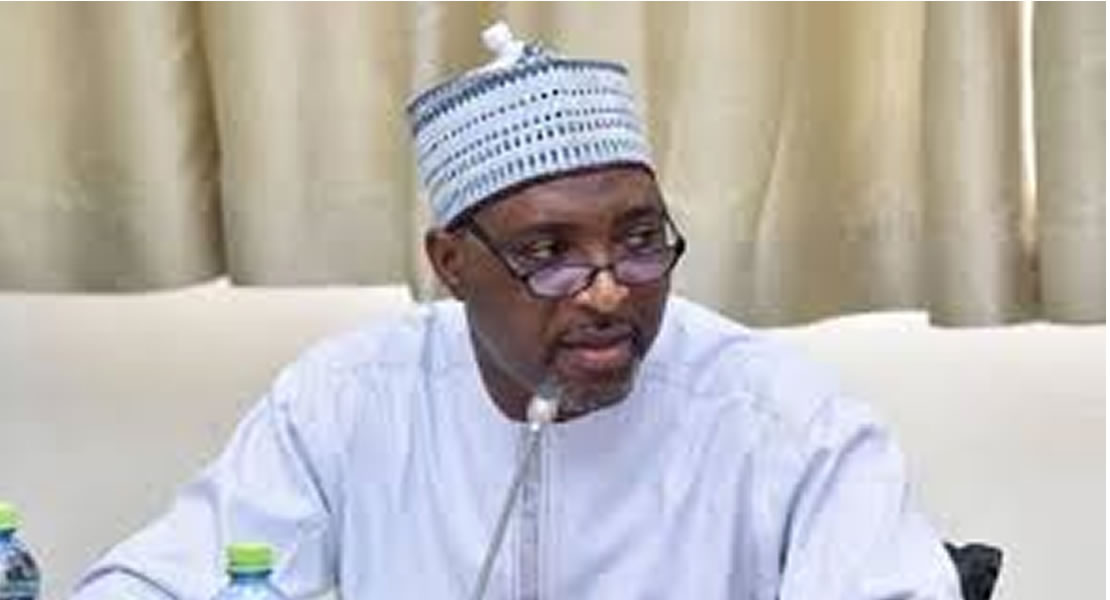
The Interior Minister, Mohammed-Mubarak Muntaka, has shed light on the daunting statistics behind the recent security services recruitment exercise, revealing that a staggering 506,618 Ghanaians applied for positions, despite the government only having the fiscal space to absorb a mere 5,000 personnel.
Addressing the public to clarify the processes adopted, the Minister emphasized that the rigorous selection criteria were a necessary evil to manage the overwhelming numbers and ensure the services get the best candidates.
Providing a breakdown of the figures, Mr. Muntaka highlighted the extreme disparity between applicants and available slots.
He noted that the Ghana Police Service, which currently has a total strength of 49,000 officers from the IGP to the last constable, received over 130,000 applications. Similarly, the Ghana Immigration Service saw a staggering 180,000 young Ghanaians vying for positions, despite the service’s current strength standing at just 18,000.
The situation was mirrored in the Fire Service with 124,000 applicants and the Prisons Service with 71,000, creating a bottleneck where millions of youth are chasing a handful of opportunities.
The Minister attributed the limited intake of just 5,000 personnel—comprising 3,000 for the Police and smaller quotas for the other services—directly to the country’s current economic challenges and the constraints of the International Monetary Fund (IMF) program.
He explained that while he would ideally like to recruit hundreds of thousands, the existing wage bill is unsustainable. “If you put all of them together, they are less than 100,000, but even that, their wage bill is about 13 billion,” Muntaka stated, appealing to the youth to be practical about what the economy can bear.
To manage the colossal number of applicants, the Ministry instituted a multi-stage screening process, culminating in an aptitude test with a pass mark set at 65%.
The Minister explained that this high threshold was set deliberately to filter the numbers before the medical examination stage, specifically to prevent financially burdening unsuccessful applicants. “Are you going to allow over 400,000 people to go and do medicals when you know you have space for only 5,000?” he queried, noting that medical exams, which include mental health and drug tests, can be costly. Even with the 65% cut-off, 105,000 candidates have qualified for medicals, far exceeding the 5,000 available slots.
Acknowledging the disappointment this will cause, Mr. Muntaka defended the use of standardized testing as the most transparent and fairest method to select candidates. He argued that it removes the human interference and bias that could plague a manually selected process. He drew a parallel to illustrate the difficulty, asking how one would fairly select 5,000 media professionals from the entire country without a standardized system. “You have to use a system that is devoid of human interference,” he insisted, stressing the need for professional and mentally sound officers in the security services.
Looking beyond the immediate crunch, the Minister assured disappointed applicants that this is not the end of the road.
He revealed that the data of those who qualified but were not recruited will be kept for future exercises, potentially in 2026, once the economy improves and the fiscal space widens.
Furthermore, he highlighted the government’s auxiliary initiatives, such as the community police (Zonal) and fire assistant programs, which have already absorbed 25,000 youth. “They get to know the job so that the next recruitment will be able to prioritize them,” Muntaka concluded, urging the youth to remain hopeful as the government seeks to open more opportunities without compromising on the quality of the security services.
Dominic Shirimori/Ghanamps.com