News:
August 3, 2026
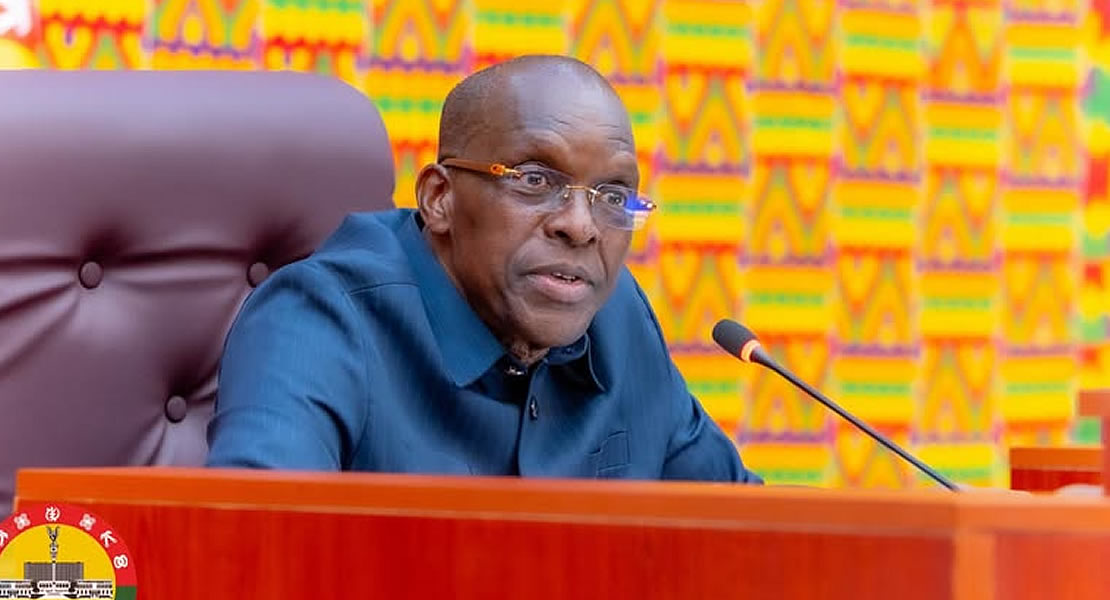
Parliament of Ghana adjourned sine die on Friday, July 31, 2026, bringing the Second Meeting of the Second Session of the Ninth Parliament to a close without revisiting the controversial Human Sexual Rights and Family Values Bill, 2026 — commonly known as the anti-LGBTQ bill.
The adjournment came despite an assurance by Speaker Alban Bagbin, who had told the National Chief Imam on July 30 that the House would likely rescind its previous decision on the bill to allow a review of three key clauses relating to sentencing provisions before re-passing it. Although a motion to rescind the earlier decision was listed on the Order Paper for Friday, July 31, the House was unable to adopt it before adjournment.
Mid-Year Budget Review
The House adjourned after completing debate on the 2026 Mid-Year Budget Review, presented by Finance Minister Dr. Cassiel Ato Forson on Thursday, July 23, 2026.
Delivering the statutory review, Dr. Forson declared that Ghana’s economic recovery is “real” and that the country will not return to the economic challenges that forced it to seek international support. He attributed the gains to deliberate structural reforms introduced by the Mahama administration rather than luck, debt restructuring, or the IMF programme.
Key economic highlights from the review include:
· Debt-to-GDP ratio dropped to 45% as of end-June 2026, achieving the target years ahead of IMF timeline. Ghana has moved from “debt default to credibility” within three and a half years.
· 91-day Treasury bill rate fell from 11% in December 2025 to 5.73% in June 2026.
· Bank of Ghana policy rate reduced by 1,300 basis points — from 27% in January 2025 to 14% in July 2026.
· Cedi appreciated by 40.7% against the US dollar in 2025.
· Government generated GH¢124.8 billion in revenue and grants in the first half, just 1.03% below target, while cash expenditure stood at GH¢136.9 billion — well below the GH¢172.5 billion target.
· Debt servicing as a share of domestic revenue declined sharply from 55.7% in 2022 to 28.8% in 2025.
Dr. Forson also announced that Ghana will not seek supplementary budget estimates for the remainder of the year, with 2026 appropriations remaining unchanged. He confirmed that Ghana has achieved its first-half targets and is on track to meet the end-year target of 1.5% of GDP. The IMF Executive Board is expected to approve the final review of Ghana’s bailout programme next week, with the country transitioning into a 36-month Policy Coordination Instrument.
The Minister pushed back against claims of under-spending, presenting a detailed breakdown of expenditures including GH¢48.8 billion for public sector workers, GH¢21.5 billion for debt interest, GH¢4.5 billion for the National Health Insurance Scheme, GH¢4.2 billion for GETFund, GH¢11.5 billion for capital expenditure, and GH¢7.1 billion for the energy sector.
Parliamentary Debate
The Minority Leader, Alexander Afenyo-Markin, criticised the budget review as lacking concrete measures to address challenges facing Ghanaians, arguing that food prices, transportation fares, rents and electricity tariffs have increased significantly. However, Majority Leader Mahama Ayariga rejected the claims, commending the Finance Minister for improving debt sustainability and strengthening the economy.
Major Legislation Passed
Despite not revisiting the anti-LGBTQ bill, Parliament passed twelve major bills during the meeting, including:
· Ghana Cocoa Board Bill, 2026 (July 31) — guarantees cocoa farmers not less than 70% of the Free on Board export price
· Customs Bill, 2026 (July 30) — establishes a modern legal framework for customs administration
· Excise Bill, 2026 (July 30) — abolishes excise taxes on locally manufactured fruit juices
· Tribunals Bill, 2026 (July 20) — provides for the establishment of Regional and District Tribunals to reduce court backlogs
· Community Service Bill, 2026 (July 8) — introduces community service as an alternative to custodial sentences
· National Defence University, Ghana Bill, 2026 (July 17) — establishes a defence and security education centre of excellence
· Value Added Tax (Amendment) Bill, 2026 (July 29) — scraps the COVID-19 Health Recovery Levy
· Income Tax (Amendment) Bill, 2026 (July 29) — exempts the National Daily Minimum Wage from taxation
· Energy Sector Levies (Amendment) Bill, 2026 (July 31) — increases levies on fuel oil
· Ghana Investment Promotion Authority Bill, 2025 (June 25)
· Maritime and Related Offences Bill, 2026 (June 30)
Ghanamps.com