News:
November 26, 2026
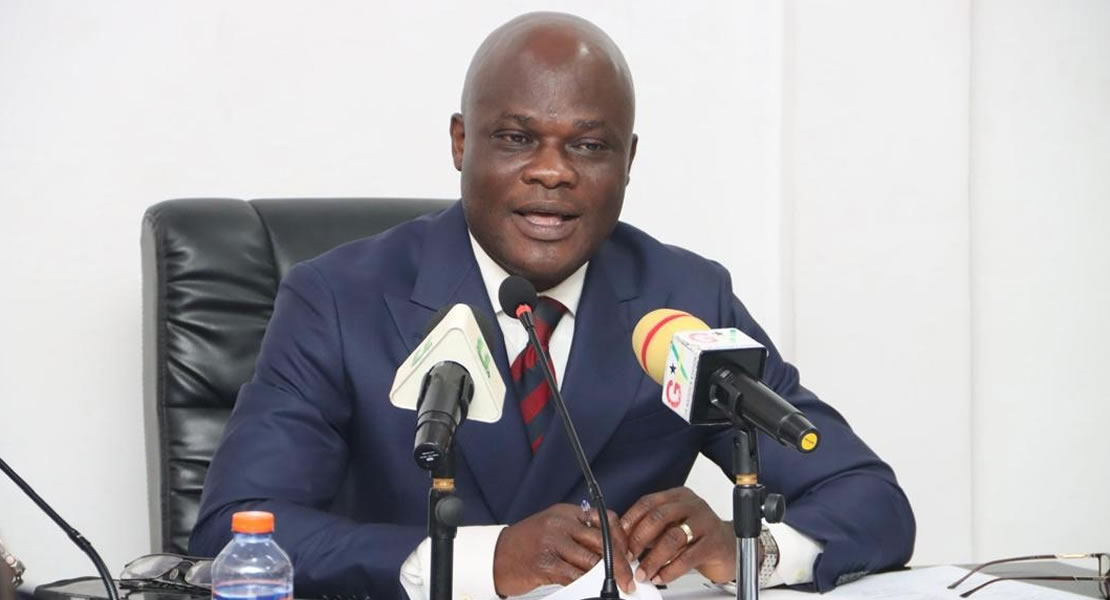
The Minister for Works, Housing, and Water Resources, Hon. Ahmed Ibrahim, has asserted that Ghana possesses the internal capacity to manage its economy without reliance on external validation, citing the government’s 2027 budget as evidence of the National Democratic Congress’s superior economic management credentials.
Contributing to the budget debate in Parliament, the Minister emphasized that despite inheriting problems created by the previous administration, the NDC government has demonstrated the competence to address challenges that the New Patriotic Party could not resolve during its tenure.
Hon. Ibrahim noted with satisfaction that both sides of the House, including the Minority Leader, acknowledge that the NDC remains the best manager of Ghana’s economy. He pointed to the 2027 budget presented by Finance Minister Dr. Cassiel Ato Forson as proof of the government’s sound economic direction, stating that the answers to Ghana’s economic challenges are contained in both the majority and minority budgets.
The Minister launched a scathing criticism of the previous government’s economic record, reminding the House that former President Nana Akufo-Addo had complained at the African Union that international rating agencies had failed him. Hon. Ibrahim observed that Ghana was downgraded by all three major international rating agencies—Standard and Poor’s, Fitch, and Moody’s—under the previous administration, prompting the establishment of a domestic credit rating agency in what he described as a desperate attempt to create a favorable marketing scheme.
Turning his attention to former Vice President Dr. Mahamudu Bawumia, the Minister questioned the credentials of the man who was presented as the economic messiah of the NPP. He recounted how then-Finance Minister Ken Ofori-Atta, an investment banker, recommended Dr. Bawumia to President Akufo-Addo, who had confessed he was a lawyer lacking expertise in finance and economics. The Minister emphasized that Dr. Bawumia’s connection to the NDC through his father, Alhaji Mumuni Bawumia, and his training under Dr. Kwabena Duffuor at the Bank of Ghana should have prepared him better for economic management.
Hon. Ibrahim drew attention to the striking parallel between the process of nominating a presidential candidate and filing to contest as a Member of Parliament, noting that both require a proposer and a seconder. He argued that since the person who proposed Dr. Bawumia, former Finance Minister Ken Ofori-Atta, is now at large in the United States refusing to appear before Parliament, Dr. Bawumia lacks a credible guarantor and does not qualify to contest the 2028 elections.
The Minister delivered a damning verdict on the former Vice President’s economic stewardship, recalling that when the NDC handed over power, inflation stood at 18.1 percent, but Dr. Bawumia presided over an increase to 52.1 and 54.1 percent. He questioned how a man presented as the best economist, a finance expert capable of handling the economy, could fail on almost all indicators during his tenure.
“I’m not surprised that the International Rating Agencies failed him,” Hon. Ibrahim declared, emphasizing that Dr. Bawumia was a banker who was given Ghana to govern but failed to deliver. The Minister’s contribution underscored the NDC government’s commitment to managing Ghana’s affairs through internal resources and expertise, rather than depending on external validation or importing economic managers whose track records have been proven wanting.
Dominic Shirimori/Ghanamps.com