News:

September 8, 2026
Faced with conflicting interpretations of the ECOWAS Court of Justice judgment on Togo’s constitutional reform, several Pan-African civil society organisations are calling for a return to the actual wording of the decision. Their approach is to distinguish its legal scope from the political interpretations being attached to it, while defending the right to democratic debate.
In Togo, the controversy surrounding the constitutional reform of 6 May 2024 is now also being played out on legal grounds. What exactly does the judgment delivered by the ECOWAS Court of Justice say? How far can its scope legitimately be extended? And what consequences can truly be drawn from it for Togo’s new constitutional order?
These are the questions on which the Pan-African Network of Human Rights Organisations and Civil Society Associations chose to intervene. Speaking to the press on Thursday, 3 September 2026, in Lomé, several member organisations of the Network presented a statement on Judgment ECW/CCJ/JUD/01/26, delivered on 29 January 2026 by the ECOWAS Court of Justice, as well as on the interpretations being made of it in Togo’s political debate.
For Barrister Bertin K. AMEGAH-ATSYON, Coordinator of the Network, the first priority is to return to the substance of the judicial decision before drawing political conclusions from it. The organisations’ position therefore rests on what they regard as a fundamental distinction: what the judgment says as a matter of law, and what various political actors claim it says.
“There is what the judgment says, and there is what the memorandum would like it to say,” the statement asserts. The phrase sums up the line taken by the Network: to bring the controversy back to the text, the operative part of the judgment and its legal effects, rather than to the interpretations surrounding it.
What the Judgment Does Not Say
On this point, the Pan-African CSOs adopt an unambiguous reading. In their view, the ECOWAS Court of Justice did not annul Togo’s Constitution of 6 May 2024. Nor did it order the automatic reinstatement of the 1992 Constitution or invalidate the institutions established under the new institutional framework.
“The Court neither annulled the Constitution of 6 May 2024, nor ordered a transition, nor imposed a national dialogue,” the Network recalls.
This clarification lies at the heart of its argument. For the signatory organisations, a judicial decision may naturally be commented on, criticised or debated. However, its interpretation cannot legitimately go beyond what its operative part actually establishes.
The Network therefore considers that a shift has occurred between the legal scope of the judgment and some of the political conclusions being drawn from it. Its intervention is intended precisely to restore that boundary.
The approach is all the more institutional in that the organisations reaffirm their commitment to the ECOWAS Court of Justice and to Community law. They therefore challenge neither the jurisdiction of the regional court nor the authority of its decisions. They maintain, however, that a judgment must be interpreted within the limits of what it actually decides as a matter of law.
The Question of Constituent Power
The second central point raised by the CSOs concerns constitutional sovereignty. For the Pan-African Network, the decision of the Community Court cannot be interpreted as granting it the power to directly repeal or reinstate a national Constitution. “The power to amend the Constitution falls within national sovereignty and belongs exclusively to the Togolese people and their institutions,” the statement maintains.
The distinction drawn is therefore between, on the one hand, the review exercised by a Community court in light of a State’s regional commitments and, on the other hand, the exercise of constituent power within the national legal order. On this basis, the CSOs consider that the judgment cannot, in itself, be presented as a decision annulling or invalidating the Constitution of 6 May 2024.
They do not, however, conclude that the reform should be shielded from criticism. On the contrary, the Network acknowledges that the new institutional framework may continue to give rise to differing assessments. What it seeks to do is distinguish political opposition to a reform from the question of its legal existence.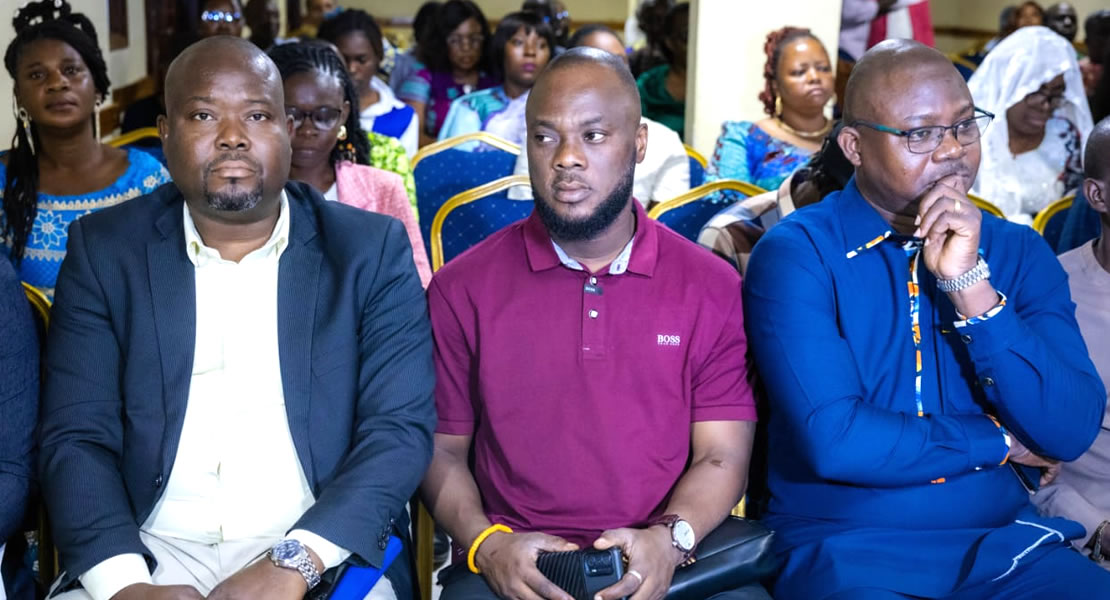
Neither Imposed Unanimity nor a Declared Crisis
It is also on this ground that the Network seeks to avoid a binary reading of its position. Defending institutional stability does not, in its view, mean denying political parties, citizens or civil society organisations the right to challenge a reform. Conversely, the existence of political disagreements would not, by itself, be sufficient to establish a situation of institutional breakdown.
“Democracy cannot be reduced to the assertion of a single interpretation of the national reality,” the statement insists. The organisations therefore defend the principle of open disagreement, but want it to take place within a framework in which legal facts are not confused with partisan positions.
This is probably where their intervention takes on its most political dimension: rather than calling for an end to the controversy, they are calling for its terms to be clarified.
Once the legal positions have been set out, the Network argues for moving beyond a permanent power struggle. For the signatory organisations, Togo would benefit from keeping channels of consultation open between public authorities, political parties and civil society. Differences of opinion, they argue, can be legitimate without becoming a source of destabilisation.
“Lasting peace does not arise from the absence of disagreements, but from the willingness to resolve them through dialogue,” the Network states.
It therefore calls for stronger citizen participation, consultation and the rule of law, while acknowledging that a reform can be supported in principle and, at the same time, improved in its implementation.
This approach enables the CSOs to defend a position intended to be balanced: political commentary should not be substituted for law, but neither should law be substituted for political debate.
In its conclusion, the Network summarises its position by calling for the constitutional reform to be assessed “as a whole”, in light of Togolese law, Community law and the country’s own realities. Under the coordination of Barrister Bertin K. AMEGAH-ATSYON, the organisations advocate both institutional stability and a vibrant democracy.
Through this collective statement, their message ultimately comes down to a simple requirement: before drawing political consequences from a judicial ruling, one must first establish precisely what it decides as a matter of law. It is on this ground — that of law, open disagreement and dialogue — that the Pan-African CSOs now want to reposition Togo’s constitutional debate.
Alex Kpotor