News:
July 31, 2026
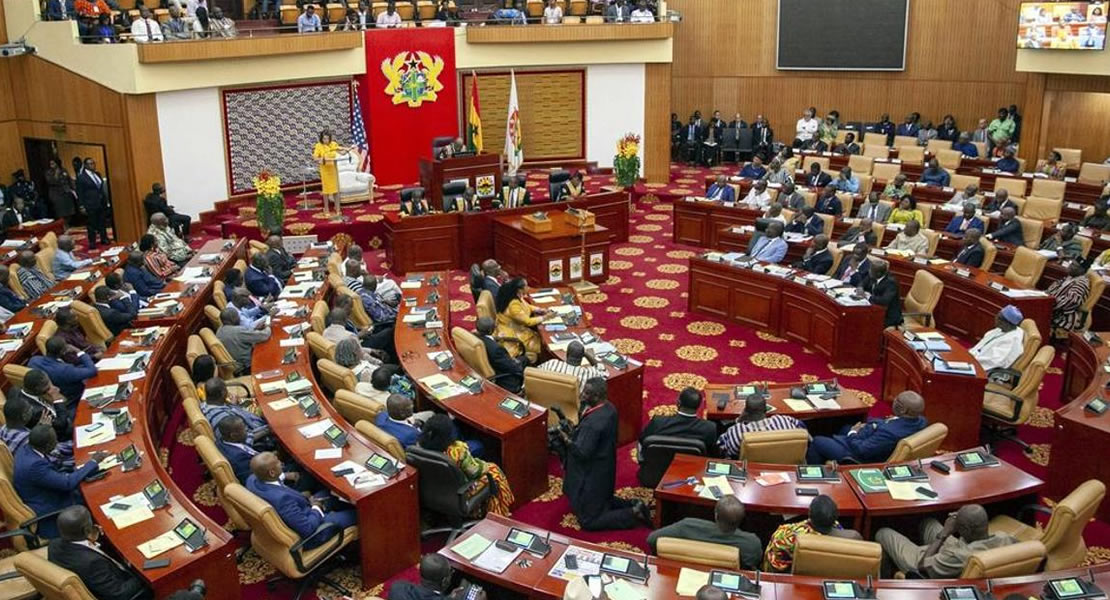
The 2nd meeting of the Second Session of the Ninth Parliament passed twelve major pieces of legislation spanning taxation, investment, maritime security, defence, justice, cocoa sector reforms, and energy financing.
However, the House adjourned without reconsidering the Human Sexual Rights and Family Values Bill, 2025 — popularly known as the anti-LGBTQ Bill — despite a firm assurance by Speaker Alban Sumana Kingsford Bagbin that the bill would be revisited before recess.
Speaker Bagbin had on Thursday, July 30, assured the National Chief Imam, Sheikh Osman Nuhu Sharubutu, that Parliament would revisit the bill, explaining that three key clauses relating to sentencing provisions required further review. “Our intention is to do it before we go on recess. We are likely to do so even by tomorrow,” the Speaker had said. Although a motion to rescind the earlier decision was listed on the Order Paper for Friday, the House was unable to adopt it before adjournment.
Despite this setback, Parliament passed several significant pieces of legislation during the meeting, which ran from May to July 2026.
The 12 bills passed
1. Human Sexual Rights and Family Values Bill, 2025 — Passed May 29, 2026
The bill seeks to criminalise LGBTQ activities while providing exemptions for legal practitioners, journalists, and media organisations acting in their professional capacities. It prohibits activities relating to LGBTQ+ advocacy, promotion and related practices, and has generated significant public, legal and international debate over human rights and constitutional freedoms. The bill was first passed in 2024 but former President Nana Addo Dankwa Akufo-Addo did not assent to it.
2. Ghana Investment Promotion Authority Bill, 2025 — Passed June 25, 2026
The bill establishes a new Ghana Investment Promotion Authority (GIPA), replacing the existing Ghana Investment Promotion Centre. It removes the minimum capital requirement for investors and strengthens GIPA’s role in facilitating investment and supporting Ghanaian firms to expand into African markets under the African Continental Free Trade Area (AfCFTA). Finance Minister Dr Cassiel Ato Forson presented the bill on December 18, 2025.
3. Maritime and Related Offences Bill, 2026 — Passed June 30, 2026
The legislation establishes Ghana’s first comprehensive legal framework to combat piracy, armed robbery at sea, and other maritime crimes. It criminalises piracy, armed robbery at sea, illegal fishing, trafficking and other offences committed within Ghana’s maritime domain, aligning the country’s laws with international maritime conventions including the UN Law of the Sea and the 1988 Convention for the Suppression of Unlawful Acts Against the Safety of Maritime Navigation.
4. Community Service Bill, 2026 — Passed July 8, 2026
The bill introduces community service as a formal legal alternative to custodial sentences for persons convicted of specified categories of offences. It establishes a National Community Service Secretariat to oversee supervision, monitoring and enforcement of community service orders. The POS Foundation hailed the passage as a landmark achievement in Ghana’s criminal justice reform agenda that will promote rehabilitation, reduce prison overcrowding, and strengthen restorative justice. Interior Minister Alhaji Muntaka Mohammed-Mubarak moved the motion for its third reading.
5. National Defence University, Ghana Bill, 2026 — Passed July 17, 2026
The bill paves the way for the establishment of the National Defence University to consolidate and coordinate the tertiary education programmes of the Ghana Armed Forces. The university will offer diploma, undergraduate, postgraduate and PhD programmes to both military personnel and civilians engaged in national security and defence in Ghana and across Africa. It will have autonomy to award certificates, diplomas and degrees.
6. Value Added Tax (Amendment) Bill, 2026 — Passed July 29, 2026
The amendment reforms Ghana’s VAT regime by scrapping the COVID-19 Health Recovery Levy and simplifying tax administration. It also introduces a VAT registration threshold for service providers.
7. Income Tax (Amendment) Bill, 2026 — Passed July 29, 2026
The bill exempts the National Daily Minimum Wage from taxation and eases compliance requirements for micro and small businesses.
8. Tribunals Bill, 2026 — Passed July 30, 2026
The bill provides for the re-establishment of Regional and District Tribunals under a new legal framework to help reduce the backlog of cases in the courts. The more than 50-clause bill was laid before Parliament on June 26, 2026, by the Minister of Lands and Natural Resources, Mr Emmanuel Armah-Kofi Buah. It was passed despite a walk-out by the Minority Caucus, which strongly opposed the legislation.
9. Customs Bill, 2026 — Passed July 30, 2026
The bill establishes a modern legal framework for customs administration, consolidating existing customs laws to facilitate international trade, strengthen border security, and improve domestic revenue mobilisation. It prohibits the importation of salvaged vehicles and vehicles older than ten years while introducing incentives for local automotive manufacturers. The bill also establishes a comprehensive customs risk management framework comprising a National Single Window System.
10. Excise Bill, 2026 — Passed July 30, 2026
The bill abolishes excise taxes on locally manufactured fruit juices to lower consumer prices, encourage healthier consumption, and support local agro-processing industries. It consolidates and modernises the legal framework governing excise duties on selected locally manufactured and imported goods.
11. Ghana Cocoa Board Bill, 2026 — Passed July 30, 2026
The bill reforms the legal framework governing the cocoa sector, establishing COCOBOD as the statutory regulator of the cocoa value chain. Crucially, it guarantees cocoa farmers not less than 70 per cent of the Free on Board (FOB) export price through COCOBOD. The bill was passed under a certificate of urgency after the Finance Committee recommended expediting the legislation ahead of the 2026/2027 cocoa season.
12. Energy Sector Levies (Amendment) Bill, 2026 — Passed July 31, 2026
The amendment raises the Energy Sector Shortfall and Debt Repayment Levy on fuel oil from GH¢0.24 per litre to GH¢1.93 per litre, bringing it in line with the levy charged on diesel and marine gas oil. It also increases the Road Fund Levy on fuel oil, with the government saying the amendments are intended to seal loopholes and prevent tax avoidance in the petroleum sector.
Six of the twelve bills — VAT, Income Tax, Tribunals, Customs, Excise, Cocoa Board and Energy Levies — were passed in the last three sitting days as the fiscal package cleared ahead of the meeting’s close.
The House adjourned after concluding debate on the Mid-Year Review of the 2026 Budget Statement and Economic Policy presented by Finance Minister Dr Cassiel Ato Baah Forson. All bills passed now await presidential assent before they become law.
Dominic Shirimori/Ghanamps.com