News:
July 2, 2026
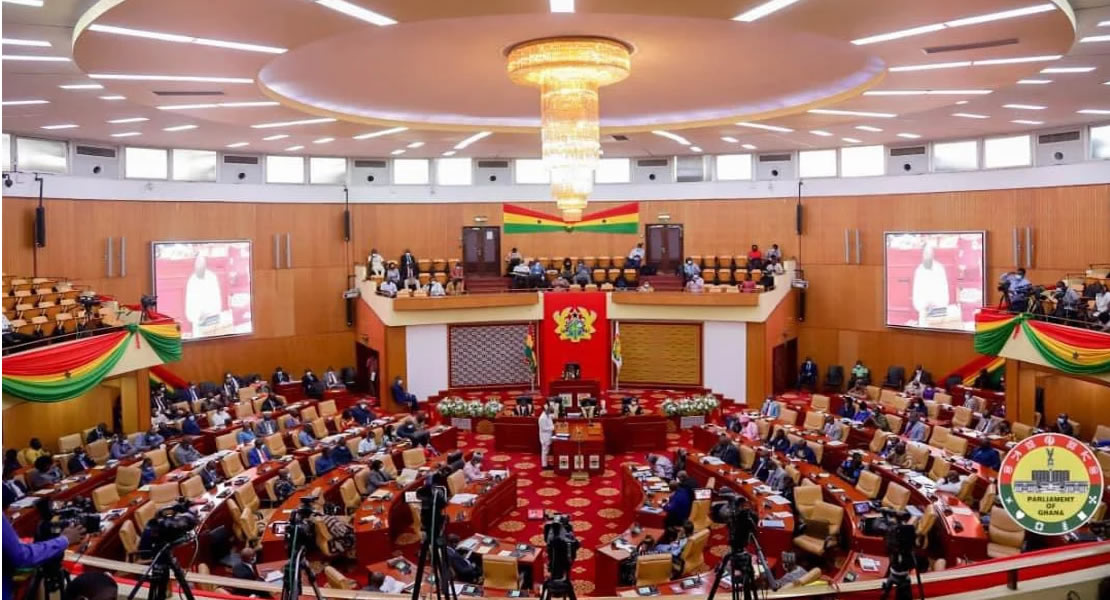
Ghana’s Parliament has ratified bilateral Air Services Agreements (BASAs) with six countries – Benin, Saudi Arabia, Mauritius, Guyana, Luxembourg and Qatar – in a move aimed at strengthening international air connectivity and positioning Ghana as the aviation hub of West Africa.
The agreements, signed between 2018 and 2023 but requiring parliamentary ratification to take effect, establish a comprehensive legal framework to regulate and promote air services between Ghana and the partner states. They ensure fair, balanced and transparent operating conditions for designated airlines while safeguarding the sovereign rights of all parties involved.
Legal framework and compliance
Presenting the agreements to Parliament, Transport Minister Joseph Bukari Nikpe said the ratification removes longstanding operational barriers that have complicated regional flight operations. He explained that under international aviation regulations, commercial and state aircraft are generally required to obtain authorisation before entering another country’s sovereign airspace – even when merely flying over a country.
“You have to have an agreement with the connected country before you can use their airspace. Even if you’re flying over a country, you need permission,” Mr Nikpe told the Parliamentary Press Corps. “But if you have these treaties or conventions ratified by Parliament, you can simply notify them that you are using the airspace, and you don’t need any further agreement”.
The Minister emphasised that the ratification makes Ghana compliant with the International Civil Aviation Organisation (ICAO), aligning the country with global aviation standards. The agreements also include provisions for resolving disputes, ensuring compliance with domestic laws and safeguarding the financial sustainability of international air transport operations.
Strategic vision for West African hub
Mr Nikpe reiterated the government’s ambition to transform Ghana into West Africa’s primary aviation hub. “Ghana as a country we are positioning ourselves to become the hub to aviation within the West Africa sub-region to be able to facilitate travels, to be able to facilitate trades, to be able to facilitate tourism and commerce,” he said.
He noted that commercial airlines require definitive legal pacts before utilising Ghanaian airspace and airports, and the ratified agreements now provide the certainty they need.
Parliamentary contributions
Supporting the motion on the floor of Parliament, the Member of Parliament for Takoradi, Kwabena Okyere Darko-Mensah, urged the government to complement international air connectivity by expanding domestic aviation services. He suggested Ghana could draw lessons from Mauritius, where smaller aircraft are used to connect tourists to destinations that are difficult to access by road.
“Mauritius, for instance, has smaller planes that can do short distances to tourism sites. We don’t seem to have them in Ghana. If we have them, a lot of the hard-to-reach areas in Ghana can be reached to boost tourism in this country,” he said.
Mr Darko-Mensah also called for greater investment in charter flight services, arguing that the newly ratified agreements present opportunities for Ghana to build capacity and generate additional revenue.
Economic benefits and next steps
The government expects the agreements to enhance trade, tourism, investment and business relations by improving air connectivity and facilitating the efficient movement of passengers and cargo. The ratification forms part of Ghana’s broader efforts to expand its aviation network, strengthen bilateral relations and reinforce its ambition of becoming the leading aviation hub in West Africa.
The bilateral air services agreements take effect immediately following Parliament’s ratification.
Dominic Shirimori/Ghanamps.com