News:
March 19, 2026
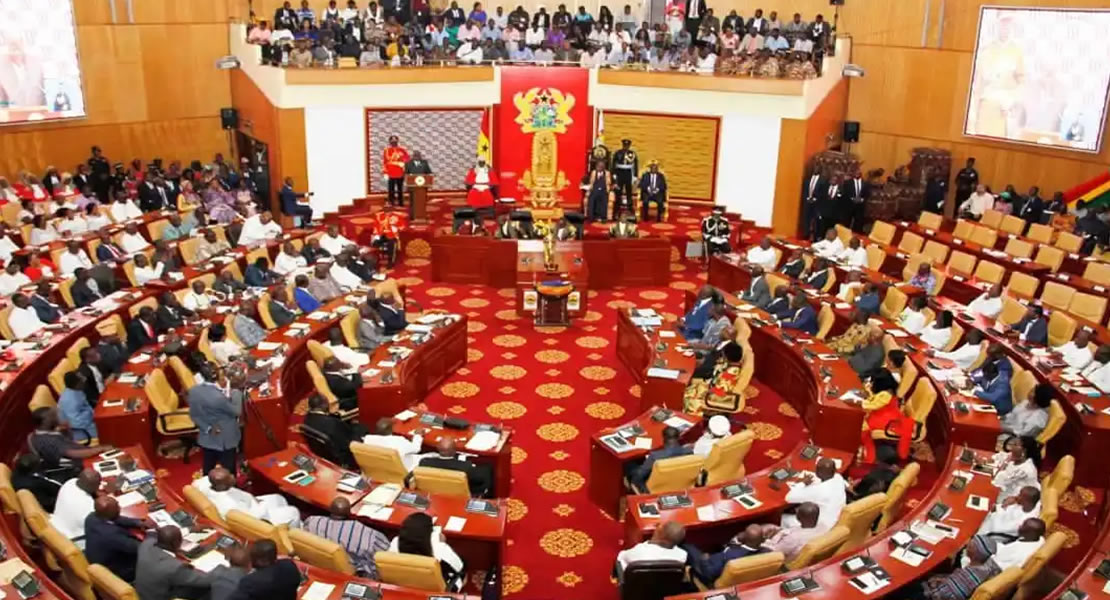
Parliament has, by a majority resolution, ratified the mining lease agreement between the Government of Ghana (GoG) and Barari DV Ghana Limited for the mining of lithium and associated minerals at Mankessim in the Central Region. The approval, granted on Thursday, March 19, 2026, sets the stage for what is expected to be the country’s first large-scale commercial lithium extraction project.
The ratification was, however, not without contention, as the Minority Caucus voted en masse against the motion. The Minority cited significant alterations to the agreement from its initial iteration presented in 2024, arguing that the current terms fall short of securing maximum value for the Ghanaian people.
Key Terms of the Lease
Presenting the report of the Lands and Forestry Committee on the floor of Parliament, the Committee’s Chairman, Collins Dauda, outlined the key provisions of the 15-year lease. He noted that the tenure is subject to renewal in accordance with the Minerals and Mining Act, 2006 (Act 703).
A central point of the Committee’s observations was the enhancement of the state’s interest in the project. While Ghana traditionally holds a 10% free carried interest in all mining companies, Mr. Dauda highlighted that the government successfully negotiated an increase to 13% specifically for this lithium agreement. This, he argued, represents a significant victory for the state in a sector where it typically holds a minority stake.
Furthermore, the Committee recommended that the Minerals Income Investment Fund (MIIF) take an additional equity stake in the project. This move is intended to further bolster the state’s revenue stream and deepen its participation in the value chain of the critical mineral, which is essential for the global green energy transition.
Infrastructure and Development Commitments
In a novel clause for Ghana’s mining sector, the lithium mining lease compels Barari DV Ghana Ltd to conduct a comprehensive feasibility study. Within six months of the parliamentary ratification, the company is required to evaluate the viability of constructing a dedicated jetty, barge, or mini-port system at Saltpond or an adjacent location. If found feasible, the development of this infrastructure is expected to facilitate the efficient export of lithium and potentially serve the broader industrial ecosystem of the Central Region.
Minority Raises Red Flags
Despite the Committee’s recommendations and the government’s assertions of a favourable deal, the Minority Caucus remained resolute in its opposition. Ranking Member on the Committee, who spoke on behalf of the Minority, argued that the version of the agreement ratified on Thursday differed markedly from the one introduced two years prior.
The Minority’s core concerns centred on what they perceived as a dilution of fiscal terms and local content provisions. They contended that while the 13% carried interest appears progressive, other elements of the financial arrangement, including royalty rates and tax stabilisation clauses, were less beneficial to the state than those initially proposed in 2024. They warned that these changes could result in the nation losing billions of cedis in potential revenue over the life of the mine.
“The people of Ghana are not getting the deal they were promised,” a leading member of the Minority stated. “This agreement has been whittled down in the shadows, and we cannot, in good conscience, endorse a lease that short-changes the very owners of the resource.”
Government’s Defence
In his concluding remarks, Chairman Collins Dauda defended the negotiated terms, describing them as a landmark achievement that sets a new and improved precedent for the mining sector. He dismissed the Minority’s concerns as politically motivated, insisting that the enhanced carried interest and the infrastructure commitments are clear indicators of the government’s commitment to ensuring that Ghana benefits substantially from the exploitation of its green minerals.
“The 13% carried interest is non-negotiable and is already enshrined in this lease, a full three percent above the legal minimum,” Mr. Dauda stated. “Furthermore, the requirement for the company to explore building a port is a direct investment in our national infrastructure that will outlive the mine itself. This is a balanced and beneficial agreement for Ghana.”
With the resolution passed, Barari DV Ghana Ltd can now proceed with the development of the project, beginning with the mandated feasibility studies, as Ghana takes a definitive step into the global lithium market.
Dominic Shirimori/Ghanamps.com