News:
May 5, 2026
The Gambian government has presented a comprehensive country report to the ECOWAS Parliament, highlighting steady consolidation of democratic institutions and intensive preparations for the December 2026 presidential election, while also addressing challenges ranging from climate change to statelessness.
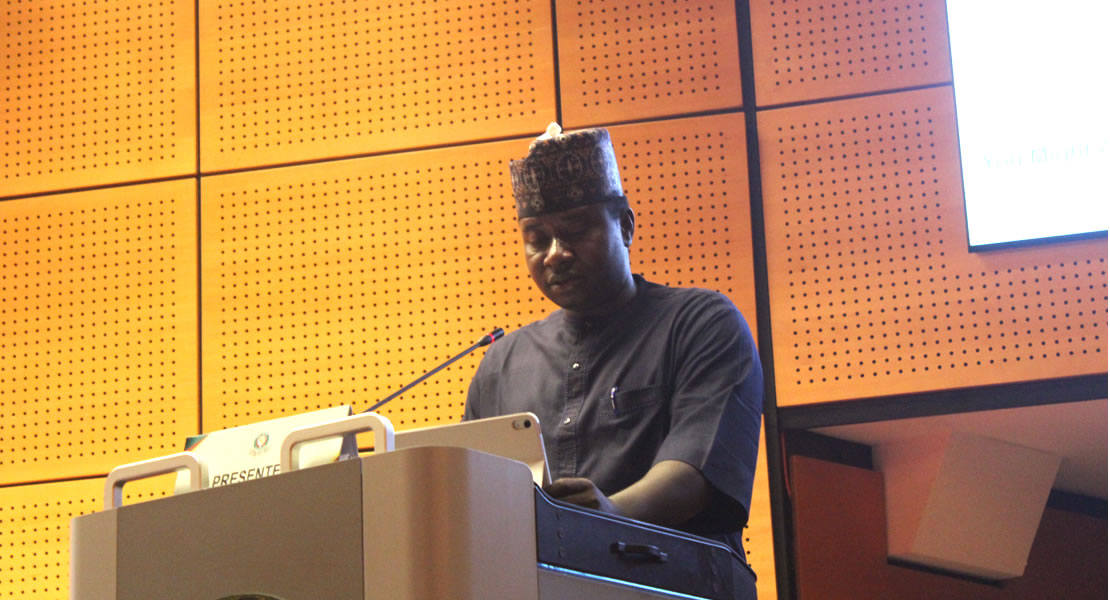
In a report presented by the leader of the Gambian delegation to the 6th Community Parliament Billay G. Tunkara.
With 22 registered political parties, political mobilisation is intensifying across the country as the Independent Electoral Commission publishes the official electoral cycle timeline. A nationwide supplementary voter registration exercise that began in April is expected to conclude in May, forming the foundation for the final voters’ register, with the official campaign period scheduled to commence in November.
In a significant step against corruption, the National Assembly confirmed appointments to the Anti-Corruption Commission in December 2025 following the enactment of the Anti-Corruption Act 2023. Complementary reforms include the Access to Information Act 2021 and the National Security Council Act 2025, alongside a special parliamentary committee inquiry into the sale of former President Yahya Jammeh’s assets, whose report was laid in March 2026.
Press freedom has seen notable progress, with The Gambia ranked 58th out of 180 countries in Reporters Without Borders’ 2025 World Press Freedom Index, moving from the “problematic” to “satisfactory” range. The country now has over 45 licensed radio stations, while its re-election to the UN Human Rights Council for the 2025–2027 term underscores commitment to global human rights norms.
On national reconciliation, the government has designated 16 February as National Dialogue Day, bringing together political party leaders, civil society, and citizen groups. Meanwhile, approximately 4,603 refugees and asylum seekers—mostly from Senegal’s Casamance region—are hosted in The Gambia, though statelessness remains a concern in communities like Ghana Town, where hundreds of long-term residents lack formal nationality due to constitutional citizenship provisions.
Climate change is severely impacting agricultural production, which employs 70 percent of the population. The World Food Programme reports that 29 percent of Gambians are food insecure. In response, the government has expanded the ROOTS project for smallholder farmers and launched the Climate-Resilient Rice Value Chain Development Project to address saline intrusion along the River Gambia.
Infrastructure developments include a $52.6 million World Bank-backed Gambia Infrastructure Project launched in December 2025, while the 23 MW Jambur Solar Power Plant—the country’s first utility-scale solar facility—has helped expand electricity access to over 70 percent of the population. However, environmental concerns persist over heavy mineral sands extraction linked to coastal erosion.
Regarding ECOWAS community texts, The Gambia passed its National Early Warning and Response Mechanism Act in December 2025. While full implementation of harmonised fuel specifications faces challenges due to dependency on Senegalese supply chains, progress on the ECOWAS Free Roaming initiative has seen live interconnections with Ghana, Sierra Leone, and Senegal, with Liberia and other nations expressing interest in joining the framework.
Kwaku Sakyi-Danso/Ghanamps.com