News:

May 11, 2026
Renowned peacebuilding expert and UN senior mediation adviser Emmanuel Habuka Bombande has weighed in on recent calls for Mali, Burkina Faso, and Niger to return to the Economic Community of West African States (ECOWAS) following a surge in terrorist attacks across the Sahel.
In a telephone interview, Bombande cautioned that current appeals from community lawmakers are largely sentimental. Any meaningful reintegration of the three countries—now members of the Alliance of Sahel States (AES)—must begin with the rebuilding and restoration of broken trust, he said.
Terrorist Spillover Threatens Entire Region
Bombande noted that the recent extremist attacks have serious consequences beyond the AES nations.
“What is happening across the Sahel region has an impact on the whole of West Africa,” he said, adding that violent extremism within the AES directly affects neighbouring West African countries, threatening their peace and stability—even if trust, perception, and suspicion remain unproven.
Reform and Collective Mechanisms First
The diplomat argued that ECOWAS needs structural reforms designed to rebuild trust. Only then can a collective security mechanism be established.
“When we are able to do that, we can talk about the three countries returning to join the bloc,” Bombande said.
He warned against moving on sentiment alone, pointing to recent events in Mali and repeated attempts to block Bamako.
“If we make it look like they have no alternative but to join ECOWAS, then the policy reflection would be wrong. At this point, one could argue they have nothing to lose.”
Deeper Roots of Instability
Bombande traced the current crises to long-standing governance failures. He said the military juntas that seized power in all three states are, in part, a consequence of failing to build governments of national unity since independence.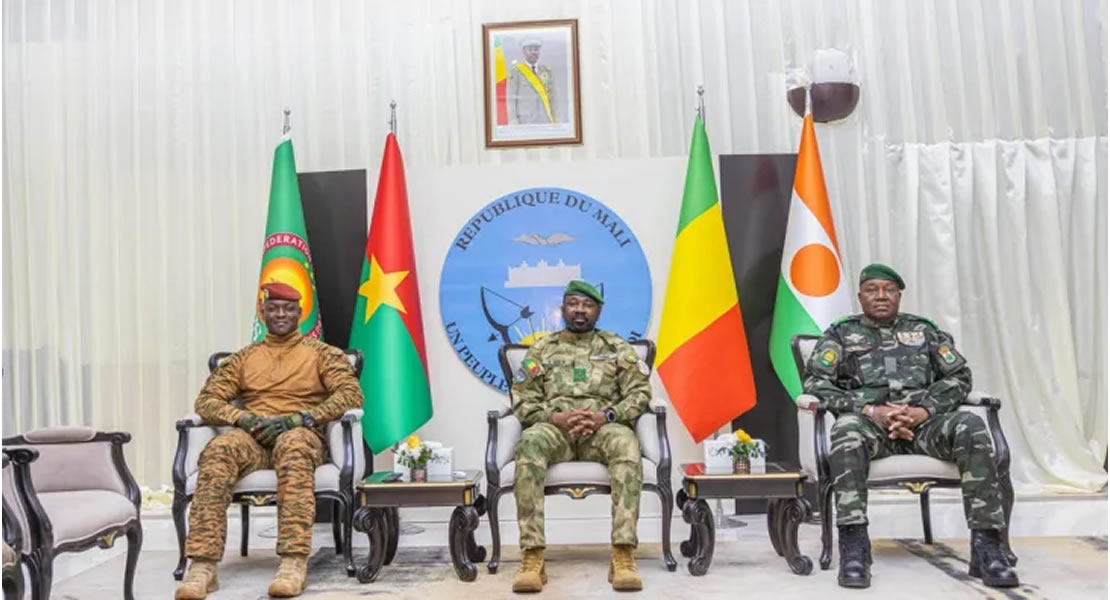
He also addressed the long-running Tuareg rebel movement seeking an independent Azawad state. Though the insurgency predates today’s terrorism, Bombande explained that after Muammar Gaddafi’s fall in 2012, rebel ranks were infiltrated by Islamic jihadist groups.
“Recently, Tuareg rebels have shown a willingness to work with terrorist groups—even if ideologically they are not aligned—because their goal remains separation from the Republic of Mali. That goes back to old grievances that Bamako has refused to address.”
Algeria’s Role and Mali’s Disunity
Bombande said Algeria mediated the 2015 Algiers Peace and Reconciliation Agreement. While Algeria has maintained support for Mali through it commitment for the pursuance of Dialogue between Bamako and the Tuaregs, there is distrust and suspicion from Bamako regarding a perceived dual role of supporting dialogue while at the same time, allowing its border areas to be a rear base of terrorists’ activities in Mali.
Kwaku Sakyi-Danso / Ghanamps.com