News:
July 27, 2026
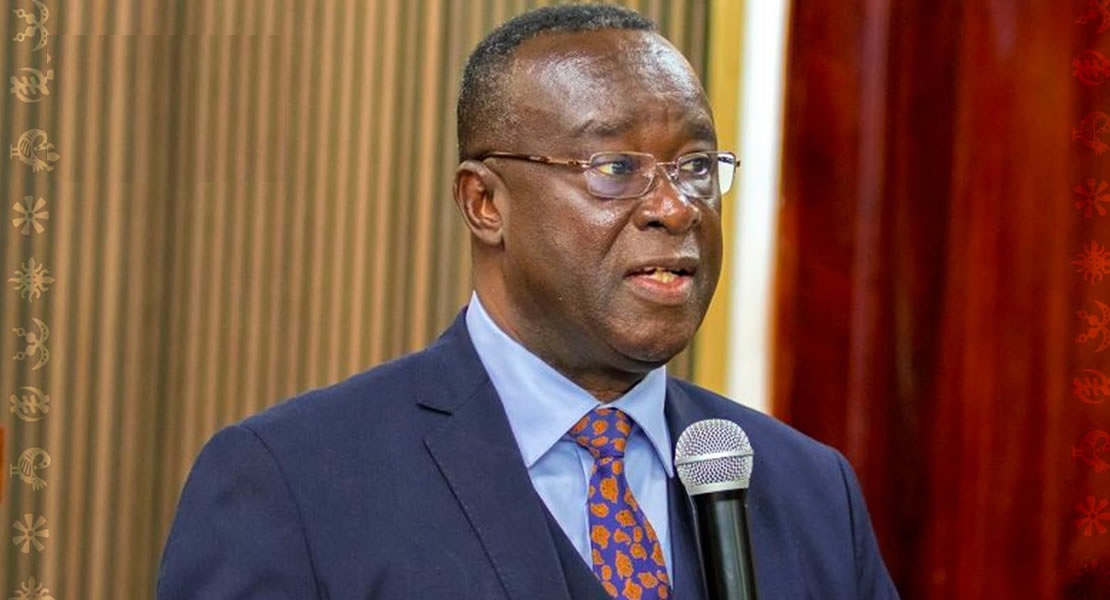
Chief Justice Justice Baffoe-Bonnie has challenged Ghanaians to reconsider what integrity truly means and why it matters more than ever for the nation’s future.
Speaking before a gathering of parliamentarians, public servants, and civil society leaders, the Chief Justice posed a fundamental question that he said Ghanaians rarely stop to ask: “What exactly is integrity?”
“To me, integrity is not merely honesty. It is not simply telling the truth,” Justice Baffoe-Bonnie declared. “Integrity is the willingness to pay the price for doing what is right. Every act of integrity carries a cost.”
The Chief Justice illustrated his point with vivid examples drawn from everyday Ghanaian life. He spoke of the market woman who sells her tomatoes at the true market price while others inflate theirs many times over. He described the student who refuses to cheat during examinations while others exchange answers and walk away with better grades. He painted the picture of the public servant who retires with nothing more than the salary he honestly earned, while others who betrayed public trust appear to live in more comfortable surroundings.
“Integrity is a price the politician pays when he chooses to persuade the voter with ideas, rather than with emblems, gifts, and inducements,” Justice Baffoe-Bonnie added.
In a moment of profound reflection, the Chief Justice acknowledged the difficult question that arises from such sacrifices: “Why should anyone choose integrity? Why should I take the harder road if dishonesty appears to reward the dishonest? Why should I obey the rules if those who built them appear to move ahead?”
These are not comfortable questions, he admitted, “but they are necessary questions. And if we are to build a nation of integrity, we must have the courage to confront them.”
The National Cost of Corruption
The Chief Justice offered a compelling answer to the question of why integrity matters, drawing a crucial distinction between personal and national costs.
“Integrity will demand a personal sacrifice, but corruption demands a national sacrifice,” he stated firmly. “The honest trader will lose some money, but dishonest trading destroys confidence in the marketplace. The honest public officer will retire without an unexplained wealth, but corruption impoverishes our entire nation.”
He extended this analysis to education and politics, noting that while cheating destroys the value of education itself, vote-buying weakens democracy and ultimately impoverishes the very people whose votes are purchased.
“The cost of integrity is often paid by the individual,” Justice Baffoe-Bonnie observed. “The cost of corruption is paid by all of us. That is why integrity is indispensable.”
The Foundation of Justice
As the nation’s most senior judicial officer, the Chief Justice spoke with particular authority about the relationship between integrity and justice.
“No nation has ever succeeded by rewarding dishonesty indefinitely,” he declared. “Sooner or later, every society discovers that trust is its greatest currency. And once trust disappears, institutions begin to weaken, our laws lose meaning, public confidence erodes, and justice itself becomes suspect.”
Justice Baffoe-Bonnie emphasized that the judiciary’s effectiveness depends upon one thing above all else: “It depends upon public confidence. People obey court orders and decisions not because judges wield physical power. They obey them because they believe that justice has been done. That belief rests entirely upon integrity. Without integrity, justice itself cannot survive.”
A National Movement
The Chief Justice welcomed the establishment of the National Integrity Awards Scheme, describing it as a timely and vital initiative.
“For too long, we have become accustomed to celebrating success without always asking how it was achieved,” he said. “We have become fascinated by outcomes without inquiring into the character that produced them. Perhaps it is time we became equally enthusiastic about celebrating those who quietly choose principle over convenience, ethics over personal advantage.”
He urged that the awards scheme should become more than a ceremonial event. “May it become a national movement. May it inspire our children. May it encourage our public servants. May it strengthen our institutions. And may it remind every Ghanaian that what is valuable indeed has a price, but its value can never be measured.”
The Chief Justice concluded by congratulating the Right Honourable Speaker and all parties involved in the initiative, pledging the judiciary’s full support.
“I assure you of the judiciary’s unwavering support in every effort that strengthens integrity, accountability, and public trust in our republic,” he said. “May God bless this initiative, and may God protect the Republic of Ghana.”
The National Integrity Awards Scheme is expected to begin accepting nominations later this year, with the first awards ceremony scheduled for early 2027.
Ghanamps.com