News:
July 28, 2026
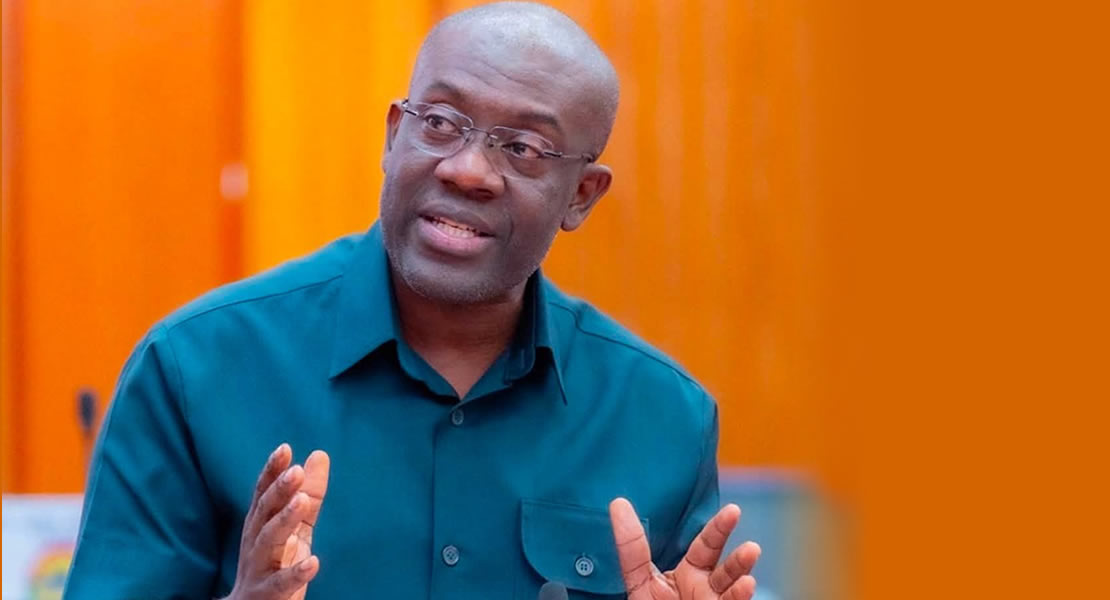
The Minority in Parliament, led by the Ranking Member on the Economy and Development Committee, Kojo Oppong Nkrumah, has delivered a blistering critique of the government’s 2026 Mid-Year Budget Review, accusing the administration of manipulating fiscal figures and failing to deliver on key developmental promises.
During a heated debate in Parliament, Mr. Oppong Nkrumah dismissed government claims of fiscal prudence, arguing that the administration had achieved its primary surplus not through improved revenue generation, but by deliberately choking expenditure. He challenged assertions that this was the first time a Finance Minister had presented a review without requesting additional funds, labeling such claims “probably false.”
“This is the first time a finance minister has presented the mid-year review and has not been able to tell the country how much of the economic program has been executed and how much has not been executed,” Mr. Oppong Nkrumah stated.
He pointed to Appendix 2a of the budget document, alleging that the government had under-executed the budget by a staggering GH₵30 billion as of the half-year mark. He argued that this under-execution translates directly into unfulfilled promises to the Ghanaian people.
“That 30 billion Ghana cedis is jobs, is projects, is programs that they promised that they were going to deliver,” he declared.
The Minority Leader took particular issue with the Finance Minister’s justification for the reduced spending, citing the IMF program’s 1.5% primary balance target. He described this reasoning as “laughable,” arguing that the target is meant to be achieved after executing economic policy, not used as a basis to avoid it.
Furthermore, he warned of troubling signals for the future, specifically the government’s plan to lower the primary balance target to 0.5% in 2027. “Because we are getting closer to elections, they are going to lower the so-called fiscal discipline,” Mr. Oppong Nkrumah asserted, implying the move is designed to free up cash for electioneering.
The MP for Ofoase-Ayirebi highlighted the human cost of the government’s expenditure cuts, pointing to critical sectors where a lack of funding has had dire consequences.
Agriculture and the Cost of Living: He referenced the devastating floods that claimed 34 lives and left six missing, arguing that the government’s refusal to release funds for flood control programs—to make “books look good on paper”—contributed to the tragedy. He also challenged the Finance Minister’s claim that GH₵1.6 billion had been released for fertilizers, stating it was untrue, and pointed to skyrocketing market prices as evidence of the policy’s failure.
Youth Unemployment and Recruitment: Mr. Oppong Nkrumah accused the government of freezing recruitment in key sectors, leaving thousands of young Ghanaians idle. He noted that the Education Minister had requested to recruit tens of thousands of teachers, and the Health Minister had expressed a desire to hire more healthcare workers, but both were denied the financial clearance to do so because the government wanted its fiscal figures to look favorable.
The ‘Audio’ Economy: Expanding on his critique of the government’s economic management, the former Information Minister accused the administration of relying on “audio announcements” rather than tangible results. He specifically targeted the much-touted 24-hour economy policy, questioning the creation of 160,000 jobs and branding the figures “laughable”.
“The jobs announced are attached to newly signed MoUs, not operating projects… A memorandum of understanding is not a payslip,” he stated, emphasizing that announcements do not equate to jobs on the payroll.
Fiscal Manipulation and Tax Concerns: Earlier, Mr. Oppong Nkrumah had accused the Finance Minister of deliberately understating the revenue target to conceal a GH₵10 billion shortfall. He also alleged that the government had suppressed expenditure by about GH₵31 billion in the first half of the year to manufacture an improved fiscal balance. He further challenged the government’s claim of introducing no new taxes, citing the introduction of a 2% Growth and Sustainability Levy, a Special Import Levy, and several others.
“The solution is not in lowering the primary balance,” Mr. Oppong Nkrumah concluded. “The solution is in paying more attention to your revenue measures so that you get the revenue that you need”. He ended his address by outlining the NPP’s vision for the economy under a future Dr. Mahamudu Bawumia-led administration, promising to ensure low inflation, a stable cedi, and responsible economic management.
Ghanamps.com