News:
September 14, 2026
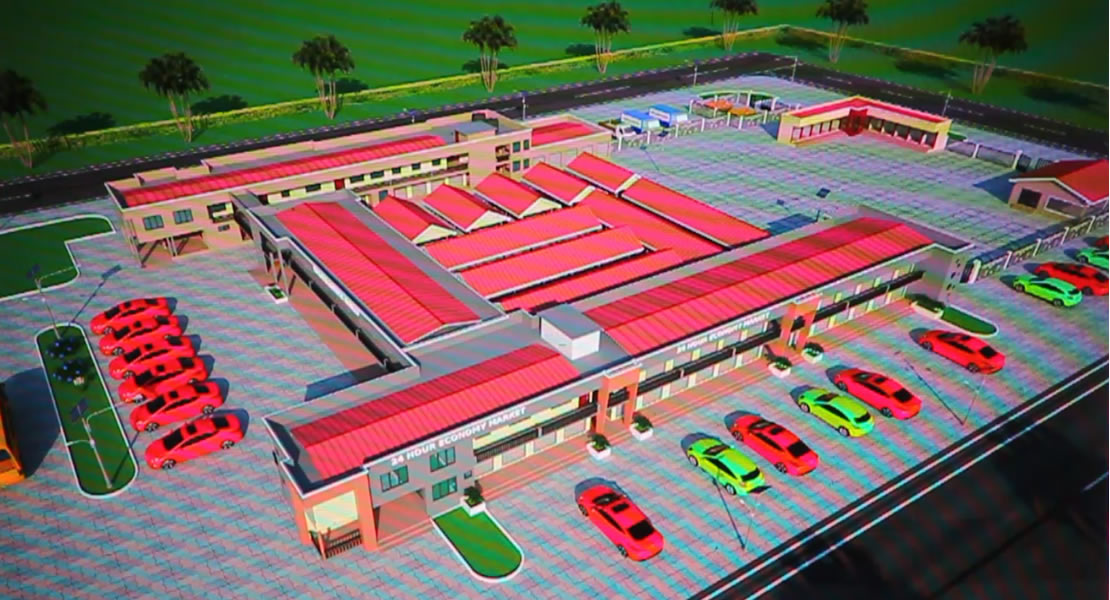
The Minority on the Local Government and Rural Development Committee has described the government’s 24-hour Economy Market program as poorly conceived, accusing the administration of implementing a national initiative without proper planning or regard for local development needs. Addressing a press conference on Monday, Francis Asenso-Boakye, Ranking Member on the Committee, said the program has been rolled out in a “piecemeal, unplanned, and disconnected” manner that ignores the actual priorities of many communities across the country.
Mr. Asenso-Boakye was quick to clarify that the Minority is not opposed to the construction and modernization of markets, nor does it reject the concept of extended trading hours where genuine economic demand exists. “Our concern, however, is that the 24-hour economy market program has currently been implemented in a piecemeal, unplanned, and disconnected” fashion, he stated, adding that the initiative appears to be an “afterthought” since it was never presented as a nationwide market infrastructure program in the governing party’s 2024 manifesto.
The Ranking Member questioned what needs assessments, feasibility studies, and local development plans are guiding the projects, noting that district assemblies are the designated planning authorities under Ghana’s decentralization framework. He argued that development cannot be a “one-size-fits-all” approach, explaining that while some districts need new markets, others require rehabilitation or expansion of existing ones, and still others have more urgent needs such as roads, drainage, schools, health facilities, and sanitation infrastructure.
Expressing even greater concern, Mr. Asenso-Boakye cited numerous examples of existing public and community infrastructure being demolished or earmarked for demolition to make way for the new markets. He referenced the Upper Manya Krobo area, where an existing market has been earmarked for demolition, and the Ashanti Region, where the King Karsu market in the Offinso North District—constructed and commissioned under former President John Agyekum Kufuor in 2007—has reportedly been demolished. In the Asante Akim South-West District, a newly constructed school has been earmarked for demolition, with grading already completed and foundation works commenced in the middle of the school premises, he added.
The Minority also highlighted demolitions in the Western North Region, where a newly constructed market yet to be occupied by the community is set to be pulled down despite resistance, and in the Upper West Region, where a magistrate court in Lawra has reportedly been demolished. Other affected areas mentioned included the Ga South Municipality, where a 70-year-old school built in 1956 was destroyed, as well as markets in Agona East, Ga North, Ketu, and Jomoro districts. Mr. Asenso-Boakye noted that traders at the Pabena and other long-standing markets are resisting similar actions, pointing to what he called “a troubling pattern” of destroying useful public assets in the name of a program whose economic justification has not been sufficiently demonstrated.
He further argued that a market does not become a viable 24-hour operation simply because the government designates it as such, stressing that success depends on sufficient commercial activity, traders willing to operate at night, customer patronage, adequate security, and supporting infrastructure like electricity, water, and sanitation. “The question should therefore not be how many 24-hour markets government has built. It should rather be what does this community actually need to strengthen its local economy?” he said.
Concluding, the Minority called on the government to immediately undertake a comprehensive and non-partisan review of the program, redesign it to be needs-based and demand-driven, and implement it only where genuine need has been established. It urged the government to rehabilitate or expand existing markets where that makes greater economic sense, complete markets already under construction rather than abandoning or demolishing them, and ensure that local assemblies, traders, traditional authorities, and residents have a meaningful say in the location, design, and implementation of such projects. “We cannot preach decentralization while imposing development priorities from the center,” Mr. Asenso-Boakye warned.
Ghanamps.com