News:
April 13, 2026
The Community Parliament is struggling financially following the departure of four member states, and urgent action is needed to secure alternative funding sources, a senior official has warned.
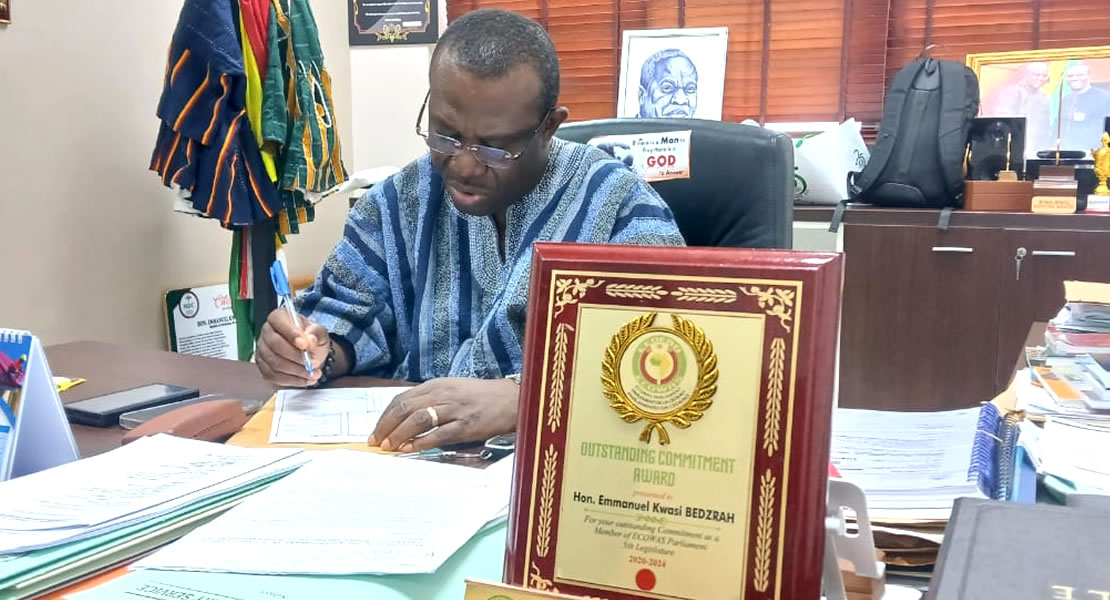
Mr. Emmanuel Kwasi Bedzrah, Rapporteur of the ECOWAS Parliament’s Committee on Administration, Finance and Budget, confirmed in an interview that the sub-regional body is facing significant financial difficulties.
“Yes, we are struggling with our finance,” Bedzrah said.
He attributed the shortfall largely to the exit of four countries from the bloc, Mauritius, Mali, Niger and Burkina Faso.
“A three-strand cord cannot be broken, but when one strand is out, you can easily break it,” he explained. “We have four of our colleagues leaving – first it was Mauritania, then Mali, Niger and Burkina Faso. Mauritius is a major country.”
Mr. Bedzrah added that the Parliament was fortunate Guinea did not follow suit. “Otherwise, this would not have been the best for us,” he said, urging that everything be done to bring the departed nations back.
Loss of community levy revenue
The financial squeeze is being felt most acutely through the loss of community levy collections. These levies, paid at various ports of entry on imports to ECOWAS member states, are no longer being received from Niger, Mali and Burkina Faso.
“We are not getting those funds – the community levy – any longer,” Bedzrah said. He noted that the ECOWAS Regional Electricity Regulatory Authority (ERERA) had informed him that while some levy payments continue, others have stopped because those countries no longer belong to the bloc.
Session locations affected by budget constraints
The funding crisis has also forced changes to the Parliament’s schedule and venue plans. The first Extraordinary Session of 2026 was originally scheduled to be held in Dakar, Senegal, but was moved to Abuja, Nigeria.
“For the 2026 Ordinary Session, we will also be going to Abuja,” Bedzrah said. “Our Supplementary Act does not subscribe to that – it says we should move from member state to member state within the sub-region for our Extraordinary Sessions. That is not what we are witnessing now, all because we do not have money.”
Call for ‘outside the box’ funding
Asked whether the sub-regional bloc should look beyond the community levy to generate funds, Bedzrah confirmed that his committee has already made proposals to the Director of Administration and Finance.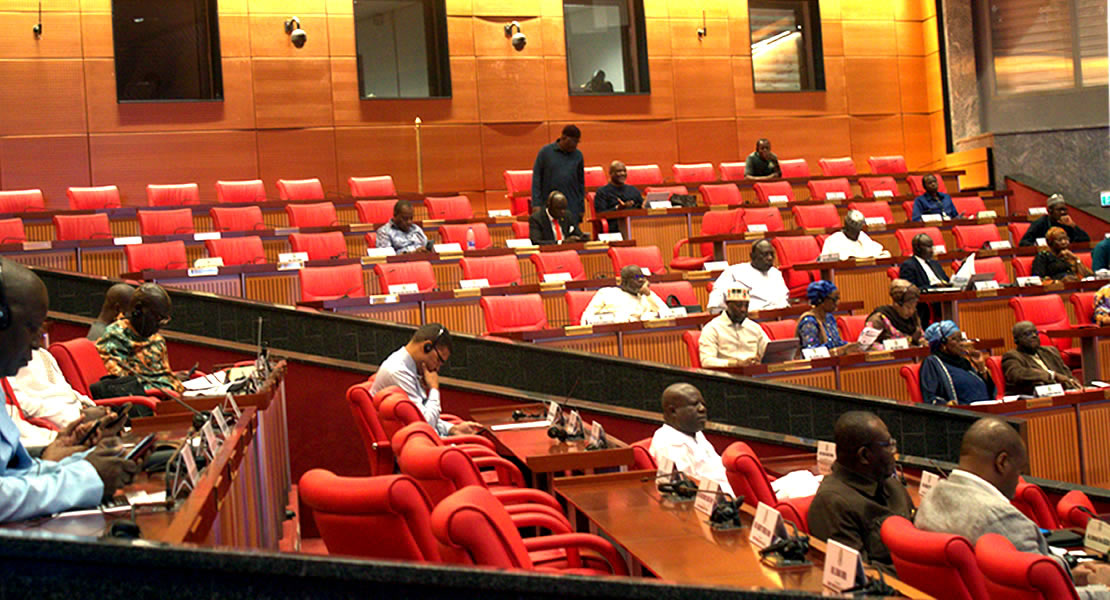
“There should be thinking outside the box to generate funds,” he said, pointing to potential partnerships with development partners. He added that a meeting in Liberia this week would explore these options further.
“Those we have engaged are willing. I am told the EU has decided to support us somehow, but we need to know the level of support. Until we get there, we will not know.”
Parliament will not accept ‘hands tied’ aid
Mr. Bedzrah acknowledged the need for caution, stressing that financial support must not come with strings that compromise the Parliament’s independence.
“When a report was brought to us for adoption in the 5th legislature – UNESCO and UNICEF, the comprehensive sexual [education] was embedded in it – they brought it to us,” he recalled. “If we had ratified it, it would have been a problem.”
He said he and colleagues, including those from Niger, Mali and Burkina Faso who were then still part of ECOWAS, resisted the provision on religious grounds – “on the grounds of Islamic region, and I also did on the grounds of being a Christian.”
“It was taken out before we passed it,” Bedzrah said. “What I am trying to explain is that looking for partnership does not mean anything at all can be pushed on us, or that we want anyone to dictate to us.”
“Yes, our eyes are widely open. We are not going to allow anyone to bring any aid that would tie our hands behind our back. No, no, no – we would not accept,” he emphasised.
Kwaku Sakyi-Danso/Ghanamps.com