News:
May 5, 2026
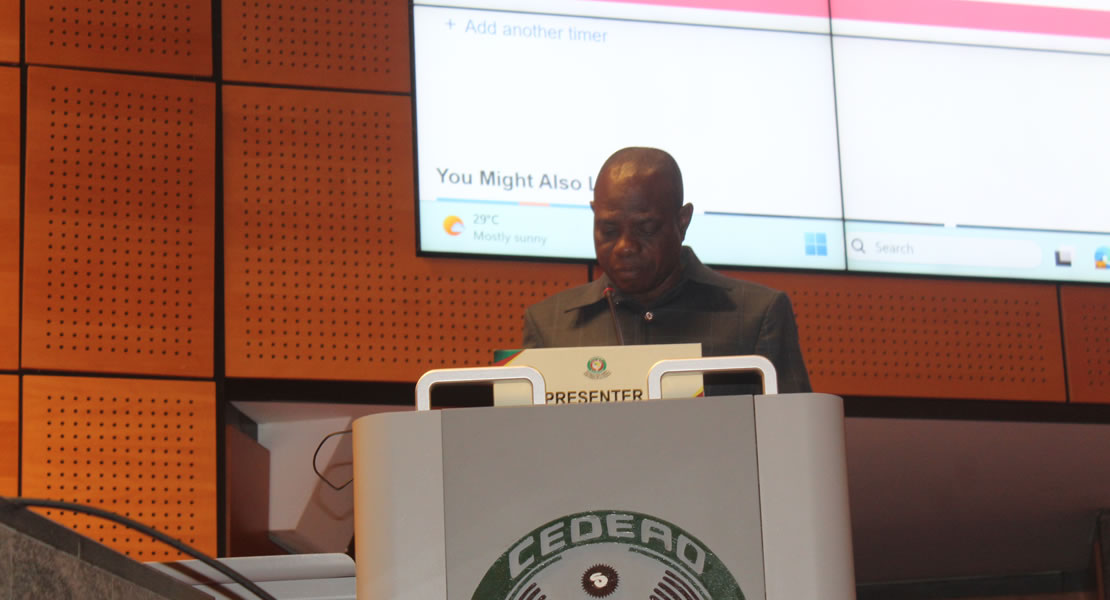
Ghana has warned of growing security challenges linked to the spillover of jihadist insurgency from Burkina Faso and the broader Sahel region, as part of a comprehensive country report submitted to the First Ordinary Session of the ECOWAS Parliament in 2026, when Dominic Napare presented at the plenary.
According to the report, Islamic militant groups have used parts of northern Ghana for logistical and medical support in connection with Sahel insurgencies, raising concern about potential escalation within Ghana’s borders. In response, Ghana established the National Centre for Coordination of Early Warning and Response Mechanism (NCCRM) in November 2021 under Act 1070, giving it a firm statutory basis independent of political administration.
The Centre monitors five thematic areas—crime, governance and human rights, health and pandemics, socio-economic conditions, and security and terrorism—producing monthly security reports and annual peace assessments shared with the ECOWAS Commission. In 2025, the Centre actively tracked security developments along Ghana’s northern borders, coordinating with security agencies on intelligence sharing and preventive action.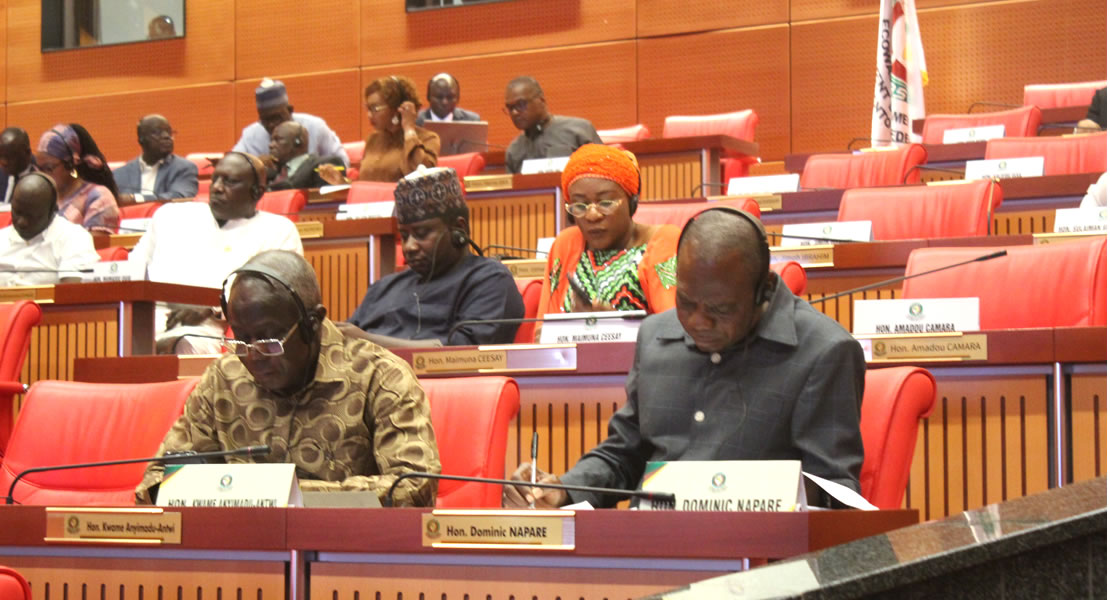
Despite these security headwinds, Ghana’s political landscape remains anchored by a robust constitutional framework that has sustained over three decades of multiparty democracy, marked by four successful and peaceful transfers of power between the National Democratic Congress and the New Patriotic Party. Following the 2024 general elections, which saw approximately 60.9 percent turnout from 18.77 million registered voters, Parliament currently comprises 184 NDC members, 87 NPP members, and four independents.
Women’s political participation, however, remains below parity, with female parliamentarians holding approximately 14.5 percent of seats—up from 13.3 percent—while youth constitute only 2.5 percent of MPs despite representing 35.9 percent of the population. The government has passed the Affirmative Action (Gender Equity) Act, 2024, and committed to affirmative steps to improve representation across these groups.
On press freedom, Ghana ranked 27th out of 180 countries in the 2024 Reporters Without Borders World Press Freedom Index, though the 2025 index noted a decline driven primarily by economic pressures including low salaries and poor working conditions rather than direct censorship. The government has trained security personnel on media rights and pledged accountability for acts of aggression against journalists.
Ghana faces significant environmental challenges driven by climate change, with flooding affecting approximately 45,000 people annually and illegal small-scale mining—known locally as galamsey—severely polluting major rivers including the Pra, Birim, Ankobra, and Offin. The government relaunched its anti-galamsey campaign in 2025 with security deployments and introduced a Community Mining Scheme to provide legal alternatives for artisanal miners.
Regarding ECOWAS compliance, Ghana has maintained a maximum sulphur content specification of 50 parts per million for petrol and diesel since July 2017, making it a frontrunner on the regional directive for automotive fuels. The country also became the first to bilaterally implement the ECOWAS Roaming Regulation in June 2023, allowing travelers to pay domestic rates for calls and SMS across partner states.
Ghana reaffirmed its commitment to transparent administration of the Community Levy, reporting total lodgments of GH₵908.53 million for January to October 2025, though GH₵170.69 million remains outstanding for transfer to the ECOWAS Commission. Following the withdrawal of Burkina Faso, Mali, and Niger from ECOWAS, Ghana has engaged these countries through presidential working visits and the appointment of a Special Envoy.
Kwaku Sakyi-Danso/Ghanamps.com