News:
March 25, 2026
The Minority on Parliament’s Roads and Transport Committee has expressed alarm over what it describes as a sharp decline in government commitment to Ghana’s railway sector, citing a drastic reduction in budgetary allocations and the abandonment of several key infrastructure projects.
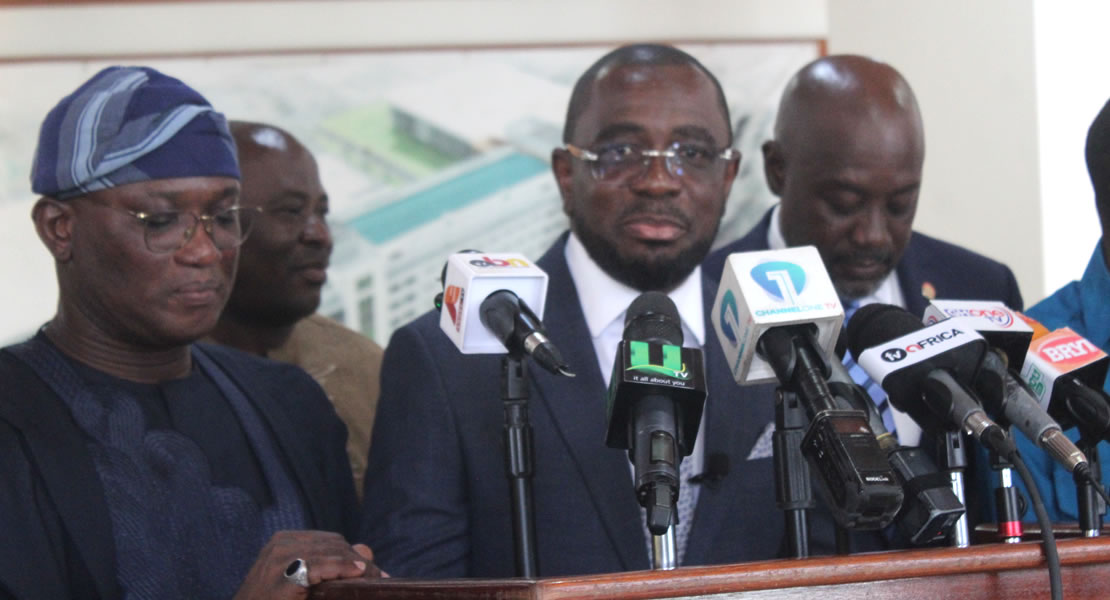
Speaking to the press on Tuesday, Ranking Member Kennedy Nyarko Osei highlighted that the sector received no budgetary allocation in 2025. He noted that the situation has not significantly improved in 2026, with only GH¢ 73 million earmarked for railway development nationwide.
This stands in stark contrast to the period between 2017 and 2024, which Mr. Osei characterized as a time of renewed focus on railway modernization. During those years, over USD 1.1 billion was invested in the sector, leading to the procurement of two Standard Gauge Diesel Multiple Units (DMUs) and the completion of several major infrastructure projects.
“Unfortunately, several key projects that were near completion have now been effectively abandoned by the NDC government,” Mr. Osei stated.
He cited the Tema-Mpakadan railway line, which was reportedly 99 percent complete, as a primary example of a project that remains non-operational despite previous government assurances that it would be operationalized in 2025 and 2026.
Similarly, the Kojokrom-Manso railway line, which had reached approximately 95 percent completion by the end of 2024, has seen no visible continuation of work. The Manso–Huni Valley section of the Western Railway Line has also been left idle, according to the Ranking Member.
Mr. Osei warned that the operational success of these railway lines is threatened by the neglect of complementary infrastructure. He pointed specifically to the supporting entry and exit terminals for the Tema-Mpakadan line, particularly those at Mpakadan and in the Savannah Region, which he said have been abandoned.
“Without the completion of these complementary facilities, the full operational and economic value of these investments cannot be realized, thereby putting a substantial portion of this investment at risk of underutilization,” he cautioned.
Further compounding the concerns, Mr. Osei noted the termination of the Adum-Kaase railway line project by the Ghana Railway Development Authority. The approximately six-kilometer project was designed as a strategic urban transport intervention to ease congestion and facilitate the movement of goods and passengers within the Kumasi metropolis.
He described the termination as “a missed opportunity to deploy multimodal transport solutions to address urban traffic challenges.”
The Minority Ranking Member concluded that the combined effect of abandoning complementary infrastructure, delaying the operationalization of completed lines, and terminating strategic urban rail projects undermines the significant investments already made and slows the progress of Ghana’s long-term rail transportation modernization agenda.
Dominic Shirimori/Ghanamps.com