News:
July 16, 2026
Parliament descended into chaos on Thursday as the Minority Caucus, led by Minority Leader Alexander Afenyo-Markin, walked out of the chamber in protest against the proposed Tribunal Bill 2026, which they described as a dangerous attempt to create a “parallel” justice system.
The walkout came after Majority Leader reportedly shut the door to further negotiations, prompting the Minority to abandon the debate. Earlier in the day, the Majority had suspended proceedings for five hours to marshall its members into the chamber, according to the Minority. Afenyo-Markin claimed that even after the delay, only 113 NDC members were present—far short of the required quorum.
“A Parallel System”
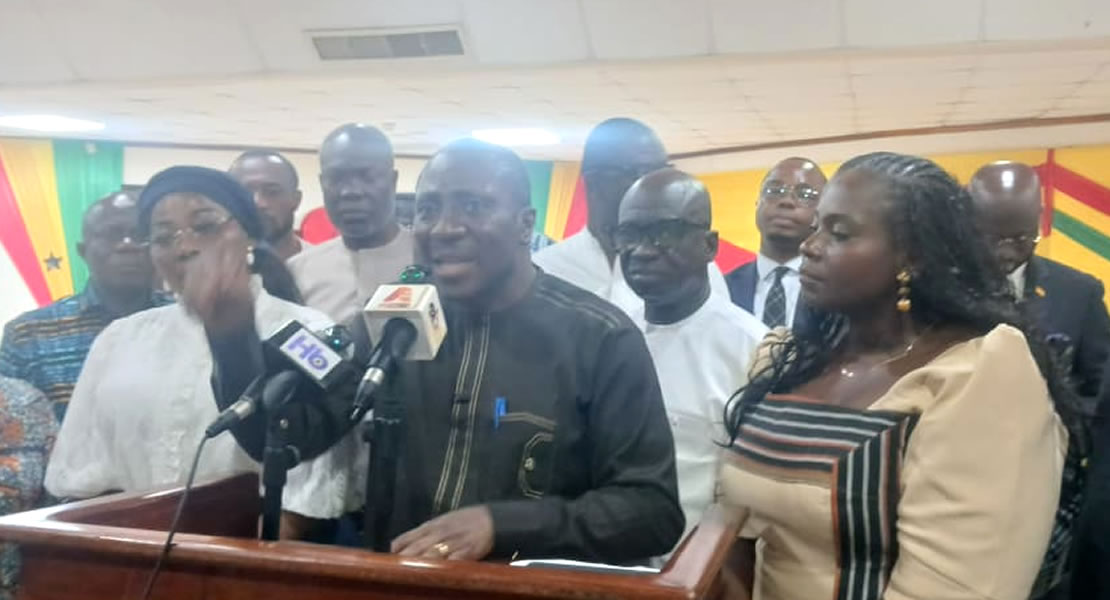
Addressing journalists on short notice after exiting the chamber, Afenyo-Markin argued that the bill seeks to establish an “analogous system” unknown to the Constitution when read in its entirety.
“It is true that mention is made to tribunal systems in our constitution, but context must be interpreted within the broader scope of articles 125, 126 and 127,” he said.
The Minority Leader warned that the proposed tribunals would operate with a composition of one legally qualified chairperson and two non-lawyers presiding over criminal matters—a structure he said undermines established judicial procedures.
“What we see in this whole exercise is to create a system where people would be pronounced guilty even before their case is properly determined,” Afenyo-Markin stated.
Drawing from the Attorney General’s Own Arguments
In a pointed reference, Afenyo-Markin cited a case in which current Attorney General Dr. Dominic Ayine—then a private practitioner—successfully argued before the Court of Appeal that a criminal conviction must be based on evidence of probative value proving all essential ingredients of the offense.
“That to deliver justice is not about media headline screams. It’s not about how public perception about an individual is, because that can be misleading,” Afenyo-Markin said, quoting his predecessor’s own legal stance.
“Jobs for the Boys”
The Minority has consistently opposed the bill since its introduction, warning that the tribunal system could become an avenue for “creating jobs for party loyalists to jail opponents”. The caucus insists that Ghana’s existing court structure—comprising District Magistrate Courts, Circuit Courts, High Courts, the Court of Appeal, and the Supreme Court—should be strengthened rather than replaced.
MP for Damongo, Samuel Jinapor, had earlier questioned the need for additional courts when current judicial institutions could be expanded and better resourced.
Organised Labour Joins Opposition
The Minority’s position received backing from organised labour on Thursday, with the Trades Union Congress (TUC) coming out strongly against the bill. The TUC called for the immediate withdrawal of the bill from Parliament and urged the government to instead focus on resourcing the existing judiciary.
“The TUC is manifestly opposed to resuscitating tribunals given our bitter experience with our history,” said TUC Secretary-General Joshua Ansah.
Attorney General Defends Bill
Responding to the Minority’s concerns, Attorney General Dr. Dominic Ayine has insisted that the bill merely gives effect to provisions already contained in the 1992 Constitution. He pointed to Articles 126 and 142 as the legal basis for establishing regional and district tribunals.
“We are not creating a parallel justice system. We are simply amplifying what is provided for in the Constitution,” Dr. Ayine said.
He assured Ghanaians that the bill includes safeguards such as a Tribunal Oversight Committee operating under the Judicial Council to prevent the excesses associated with past tribunals.
Historical Fears
The debate has revived painful memories of the PNDC era, when public tribunals operated outside the traditional judiciary and faced heavy criticism for human rights abuses. The Minority argues that the proposed legislation could reverse democratic gains and reopen those painful chapters.
The Tribunal Bill 2026, which has passed its first reading, aims to establish a two-tier structure of Regional and District Tribunals to handle cases including illegal mining (galamsey), economic crimes, tax evasion, and customs violations.
Ghanamps.com