News:
July 17, 2026
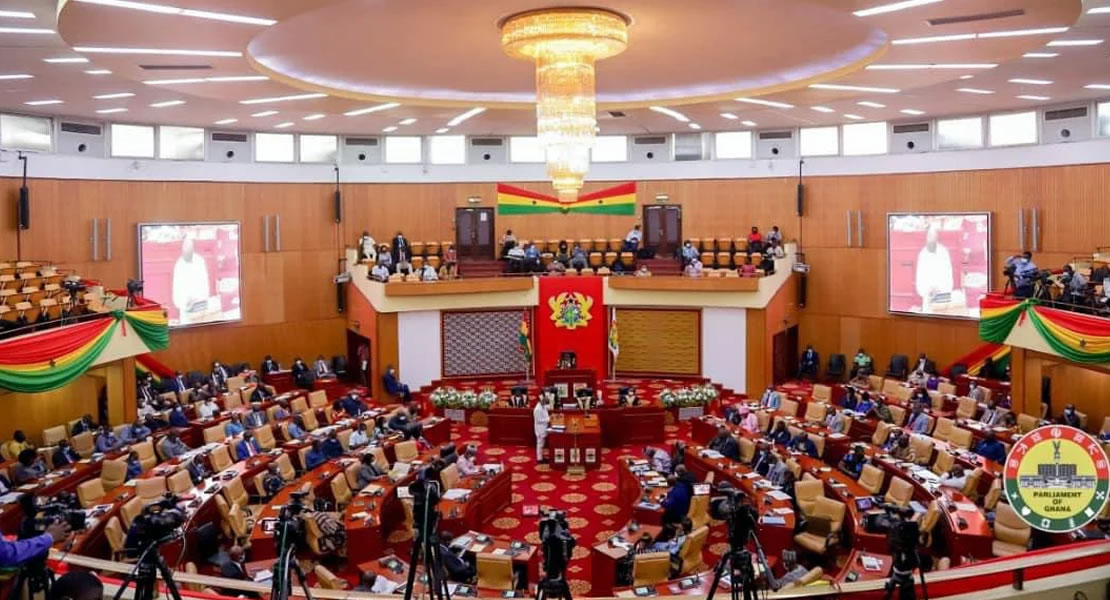
Parliament has passed the Tribunal Bill, 2026, establishing a legal framework for the re-establishment of public tribunals in Ghana, despite a dramatic walkout by the Minority Caucus and strong opposition from the Trades Union Congress (TUC).
The legislation, which creates a two-tier structure of Regional and District Tribunals, was approved on Thursday, July 16, 2026, after its third reading. It will now be transmitted to President John Dramani Mahama for assent before becoming law.
Heated debate over Clause 4
The Bill was laid before Parliament on June 26, 2026, by the Minister for Lands and Natural Resources, Emmanuel Armah-Kofi Buah, on behalf of the Attorney-General and Minister for Justice, Dr Dominic Ayine. It was subsequently referred to the Constitutional and Legal Affairs Committee for consideration.
Justifying the legislation, Dr Ayine said the tribunals were needed to address the growing backlog of cases in the regular courts, noting that traditional courts accumulate approximately 3,360 new backlog cases annually. He further noted that although Article 142 of the 1992 Constitution incorporates Regional Tribunals into Ghana’s judicial structure, they have become defunct in practice.
The Bill was passed after lengthy and heated debate, with the Minority unsuccessfully seeking the removal of Clause 4. Minority Leader Alexander Afenyo-Markin argued that the clause would create confusion within Ghana’s judicial system and should be deleted.
Majority Leader Mahama Ayariga opposed the proposal, insisting the House would complete consideration of the Bill regardless of how long proceedings took.
Voice vote dispute and walkout
First Deputy Speaker Bernard Ahiafor, who presided over proceedings, put the proposal to delete Clause 4 to a voice vote, with the Majority rejecting the amendment. Dissatisfied with the outcome, Afenyo-Markin challenged the ruling and demanded a headcount. The results showed 16 members voting in favour of deleting the clause and 135 voting against it.
Following the vote, the Minority walked out of proceedings, declaring they would not participate in the remaining stages of the Bill.
Addressing journalists after the walkout, Afenyo-Markin said the decision was taken after the Majority Leader made it clear that the governing side would proceed with the Bill regardless of concerns raised. “Once the Majority Leader makes a strong pronouncement that whatever the case, they will not listen, they will use their numbers to pass the Bill, then there was no point again,” he stated.
The Minority Leader also alleged that the Majority suspended proceedings for five hours earlier in the day after realising it lacked sufficient numbers, using the time to marshall members into the chamber. He claimed that even after the House resumed, only 113 Majority members were present—far short of the required quorum.
Minority raises constitutional concerns
Afenyo-Markin argued that the Bill would establish a parallel judicial system not contemplated by the Constitution. He maintained that Ghana already has a well-defined court hierarchy comprising District Courts, Circuit Courts, High Courts, the Court of Appeal and the Supreme Court.
“If there are issues with the system, the way to go is to reform, resource, equip and retool it, but not to create a parallel system with coordinate jurisdiction,” he said.
He further expressed concern that under the proposed tribunal system, only the chairperson would be required to be a lawyer, while the other two panel members could be non-lawyers despite adjudicating criminal matters. Afenyo-Markin warned that the arrangement could result in people being pronounced guilty before their cases are properly determined.
The Minority Leader also drew parallels with Ghana’s tribunal system during the Provisional National Defence Council (PNDC) era, arguing that the country’s experience should caution against reintroducing such institutions.
In a pointed reference, Afenyo-Markin cited the case of Republic v. Tagor and Issa Abbas, in which Dr Ayine—then a private practitioner—successfully argued before the Court of Appeal that criminal convictions must be based on credible evidence proving every essential element of an offence.
Attorney General defends Bill
Responding to the Minority’s concerns, Dr Ayine insisted that the Bill merely gives effect to provisions already contained in the 1992 Constitution. He pointed to Articles 126 and 142 as the legal basis for establishing regional and district tribunals.
“We are not creating a parallel justice system. We are simply amplifying what is provided for in the Constitution,” Dr Ayine said.
The legislation includes safeguards such as a Tribunal Oversight Committee operating under the Judicial Council to prevent the excesses associated with past tribunals. It also bars tribunals from ruling on constitutional interpretations, human rights violations or any matters legally reserved for superior courts.
Organised Labour joins opposition
The Minority’s position received backing from organised labour, with the TUC coming out strongly against the Bill. The TUC called for the immediate withdrawal of the legislation and urged the government to instead focus on resourcing the existing judiciary.
“The TUC is manifestly opposed to resuscitating tribunals given our bitter experience with our history,” said TUC Secretary-General Joshua Ansah.
The Bill fulfils a commitment made by the National Democratic Congress and President Mahama during the 2024 general election campaign. It now awaits presidential assent to become law.
Dominic Shirimori/Ghanadistricts.com